
Top 5 Most Egregious Claims in This Section
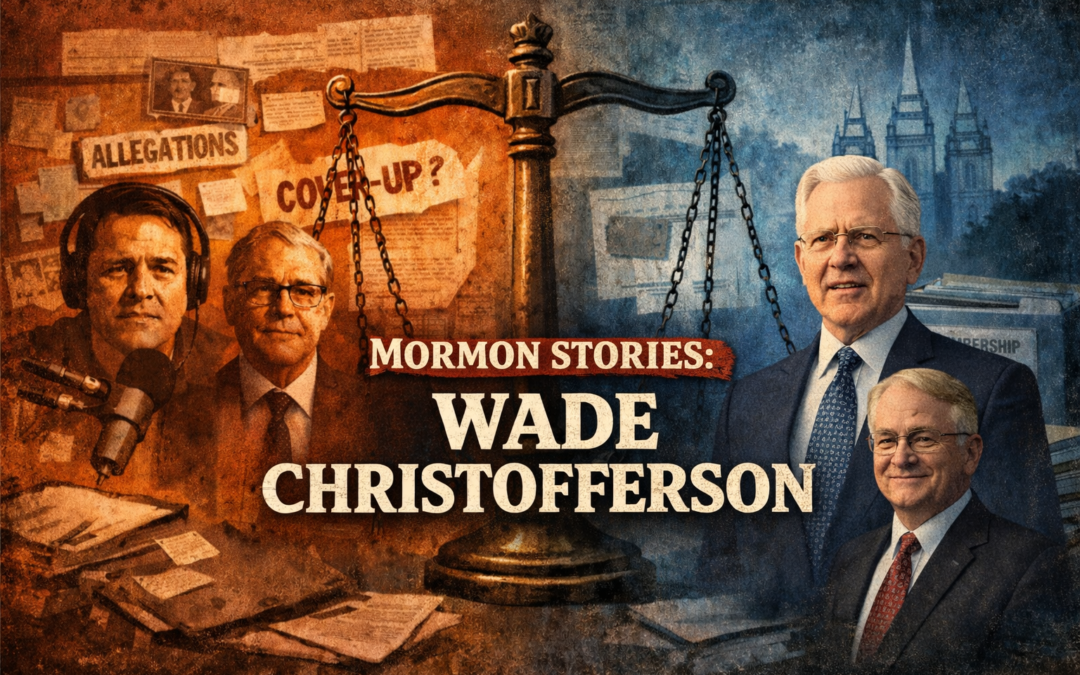
Podcast: Mormon Stories Podcast, Episode 2117, “Breaking: Mormon Church Hides Wade Christofferson Abuse Enabling More Abuse – Ed Nachel”
Podcast Summary
The following section examines five of the most serious claims made in Mormon Stories Podcast, Episode 2117, particularly those presented as factual conclusions rather than unresolved questions. The goal is not to minimize the gravity of the abuse allegations involving Wade Christofferson, which are deeply troubling on their own. Instead, this analysis focuses on evaluating where the episode moves beyond documented evidence—transforming inference, recollection, or criticism into assertions of certainty about what church leaders supposedly knew, approved, or concealed. Because such claims carry significant reputational and factual implications, they deserve careful scrutiny against the available public record.
Who Ed Nachel Is in This Episode
Ed describes himself as a convert in the Chicago area who joined the Church in 1978, was called to the high council in 1996, had known Wade for close to 20 years, and had previously served in a branch presidency and other local callings. In other words, he is presented here as a former insider witness to a local ecclesiastical process, not as a custodian of Church headquarters records.
How These Five Were Ranked
These are ranked by evidentiary overreach and reputational severity—not by the seriousness of the abuse allegations against Wade Christofferson. This rebuttal does not minimize alleged abuse. It addresses only the podcast’s strongest leaps beyond what is publicly documented.
| # | Claim | Classification | Why It Is Egregious |
|---|---|---|---|
| 1 | Top Church leadership knew and was complicit | Not proved / false-light risk | Attributes certainty and complicity to living leaders without a public documentary chain. |
| 2 | The Church covered up and enabled Wade’s later abuse | Partial inference stated as fact | Turns unresolved questions into a concluded institutional verdict. |
| 3 | Officials removed an abuse annotation from Wade’s membership record | Not proved from public record | Claims a specific record action without publicly produced membership documents. |
| 4 | The Church’s abuse hotline tells leaders not to contact police | Misleading / overgeneralized | Generalizes serious criticism from some cases into a universal official instruction. |
| 5 | Mormonism was founded in sexual predation and sexual coverups | Polemical overreach | Collapses disputed and complex 19th-century history into a totalizing slogan. |
1) “Top church leadership must have known”
Word-for-Word Quote
“people involved would have known about and approved the removal of the annotation from his record that he was a known child abuser. So they would have been complicit in a cover up making it so Wade could get rebaptized and become a bishop Rick member again and not be viewed by his family and friends as a sexual predator of children.”
Core Claim
Senior Church leaders knew Wade was a child abuser, approved removing a record warning, and became complicit in a cover-up.
Classification
Not proved / false-light risk.
Why This Is Egregious
This is the most legally and reputationally loaded claim in the section because it moves from a theory about how record annotations work to a certainty that unnamed senior leaders knowingly approved concealment.
Core Finding
The public record does not presently prove that D. Todd Christofferson or “top church leadership” knew and approved the steps alleged here. The Chicago Sun-Times reported the Church’s statement that D. Todd Christofferson was not in a position to know about, and did not know about or influence, the ecclesiastical decisions regarding his brother’s membership; the same report says he later reported a recent allegation involving a minor to legal authorities.
Current Church policy does confirm that abuse annotations are real and that restrictions remain unless the First Presidency authorizes removal of the annotation. But that policy mechanism does not prove that Wade’s specific file was altered in the way the podcast claims. In other words: a theoretical pathway is not the same thing as a documented historical fact.
Bottom Line
Serious questions may remain, but “must have known” is stronger than the current public proof can sustain.
Sources
- Chicago Sun-Times (March 5, 2026) – reports the Church’s statement denying D. Todd Christofferson knew or influenced the membership decisions and saying he reported a recent allegation involving a minor.
- General Handbook 38.6.2.5 – says abuse annotations remain unless the First Presidency authorizes removal.
- Annotation of Membership Records – explains the protective purpose of annotations.
2) “The Mormon church covered up and enabled a child sexual predator”
Word-for-Word Quote
“They would have known all that and approved it. In other words, the Mormon church covered up and enabled a child sexual predator to not be found out and then also to be elevated to further positions of leadership,”
Core Claim
The Church knowingly hid Wade’s abuse and affirmatively empowered later abuse through rebaptism and leadership placement.
Classification
Partial inference stated as fact.
Why This Is Egregious
It announces a final institutional verdict—cover-up and enabling—when the publicly available record still contains major unresolved factual gaps.
Core Finding
There is a serious question here, but the podcast states the conclusion more strongly than the evidence currently in hand. Current Church policy says members who abuse others should not be given Church callings and that sexual abuse of a child leads to a membership annotation unless the First Presidency authorizes removal. That means the policy framework is significant. But the episode does not produce Wade’s actual record, a First Presidency directive, or a document showing who approved what and when.
The Church’s statement reported by the Sun-Times says Wade was readmitted in 1997 following established disciplinary and confession processes and says the Church is aware of no abuse involving his Church service after that time. That statement may be disputed by critics, but it means the public record is still contested, not closed.
Bottom Line
The podcast can fairly raise a grave institutional question. It cannot yet present institutional guilt as conclusively proved.
Sources
- Uploaded transcript: 00:52:06–00:52:38, John Dehlin, lines 278–281.
- General Handbook 38.6.2.5 – says abusers should not be given Church callings and explains abuse-related annotations.
- Chicago Sun-Times (March 5, 2026) – reports the Church’s statement that Wade was readmitted in 1997 and that it is aware of no abuse involving his Church service after that time.
3) “Church officials removed an annotation on his records”
Word-for-Word Quote
“Said that when he was rebaptized into the church, church officials removed an annotation on his records. So, it was removed when he was rebaptized.”
Core Claim
A specific abuse annotation existed on Wade’s membership record and was later removed by Church officials at rebaptism.
Classification
Not proved from public record.
Why This Is Egregious
This is the factual hinge that supports several later accusations. If it is unproved, the rest of the certainty built on top of it weakens substantially.
Core Rebuttal
Current Church materials confirm the general policy: abuse annotations exist, bishops are expected to heed them, and restrictions remain unless the First Presidency authorizes removal. But the podcast does not produce Wade Christofferson’s membership record, an annotation notice, or a document showing that an annotation was actually removed in his case.
That matters. The difference between “this policy could allow an annotation to be removed” and “this specific annotation was removed here” is the difference between policy analysis and proof.
Bottom Line
The handbook supports the mechanism in theory. The episode does not publicly prove the mechanism was used in Wade’s case.
Sources
- Uploaded transcript: 00:47:55–00:48:27, Ed Nachel, lines 257–260.
- General Handbook 38.6.2.5 – says sexual abuse of a child leads to annotation and that restrictions remain unless the First Presidency authorizes removal.
- Annotation of Membership Records – explains that annotations exist to help protect members and others.
4) “Don’t contact the police. Keep this quiet.”
Word-for-Word Quote
“And then of course the advice is don’t contact the police. Keep this quiet.”
Core Claim
The Church’s abuse hotline, as a matter of policy, advises leaders not to involve police and to suppress abuse reports.
Classification
Misleading / overgeneralized.
Why This Is Egregious
It converts documented criticism from some cases into a universal claim about official Church policy.
Core Finding
There is a real factual core to the criticism. AP reporting has documented cases in which critics say the help line and privilege claims were used to protect the institution rather than aid prosecution. That criticism is serious and should not be dismissed.
But John’s sentence overstates the published policy. Current Church materials say leaders should fulfill all legal obligations to report abuse to civil authorities, urge abusive members to report to law enforcement, and that the Church cooperates with civil authorities when it learns of abuse. So the more accurate formulation is this: some reported cases have raised serious concern about how the system has functioned, but the current published policy does not simply say “don’t contact the police.”
Bottom Line
Sharp criticism is fair. A universal policy claim is too broad.
Sources
- Uploaded transcript: 00:39:40–00:40:19, John Dehlin, lines 214–218.
- AP News (Dec. 12, 2023) – reports criticism that the Church used a legal playbook protecting itself from abuse claims.
- General Handbook 38.6.2.5 and 38.6.2.7 – says leaders should urge reporting to law enforcement and fulfill legal reporting obligations.
- How the Church Approaches Abuse – says the Church’s first priority is to help the victim and stop the abuse, and that it cooperates with civil authorities.
5) “The Mormon church was founded and marinated in sexual predation”
Word-for-Word Quote
“the Mormon church was founded and marinated in sexual predation and sexual coverups.”
Core Claim
Mormonism’s origins are best described not as difficult or controversial history, but as foundational sexual predation and cover-up.
Classification
Polemical overreach / historically misleading.
Why This Is Egregious
It takes a broad set of complicated, partly disputed historical questions and compresses them into a single accusatory slogan presented as settled fact.
Core Rebuttal
Official Church essays openly acknowledge that Joseph Smith left multiple First Vision accounts and that plural marriage in Nauvoo included facts many modern readers find morally difficult, including Helen Mar Kimball’s young age and sealings to some women already married to other men.
But those same official sources say the First Vision accounts tell a consistent core story, and they also note that Helen later described her sealing to Joseph as “for eternity alone,” suggesting no sexual relationship. They further state that the exact nature of some already-married women’s sealings is unknown. That does not settle every historical dispute, but it does show that the podcast’s totalizing slogan goes beyond what the sources themselves establish.
Bottom Line
“Difficult, contested, and morally challenging history” is supportable. “Founded in sexual predation and coverups” is an interpretive slogan, not a demonstrated historical conclusion.
Sources
- Uploaded transcript: 01:07:22–01:09:12, John Dehlin, lines 356–365.
- First Vision Accounts – says Joseph shared multiple accounts and that the accounts tell a consistent core story despite differences in emphasis.
- Plural Marriage in Kirtland and Nauvoo – acknowledges difficult plural marriage facts while also noting that Helen Mar Kimball described her sealing as “for eternity alone” and that some sealings’ nature is unknown.
Closing Summary
The strongest pattern in this section is repeated conversion of inference into certainty. The episode can legitimately raise hard questions about secrecy, victim protection, and institutional handling. But its most aggressive lines leap past the publicly documented record and present disputed propositions as settled facts.
The five claims above are the most egregious because they either:
- accuse living leaders of knowledge and complicity without public documentary proof,
- state a specific record action as fact without producing the record,
- turn serious criticism of some cases into a universal policy statement, or
- flatten complex Church history into a sweeping moral slogan.