by Anonymous | Aug 9, 2025 | Church Conspiracy
Bottom Line
Calling tithing “evil” isn’t brave. It’s lazy. The Church doesn’t let the poor starve. It feeds them — with food and with faith. Doctrine without context isn’t truth. It’s a talking point.
| Podcast |
YouTube – Anonymous Creator |
| Episode |
“How the Mormon Church Secretly Built a $293 Billion Fortune” |
| Category |
Tithing Ethics & Accusations of Harm |
| Quote |
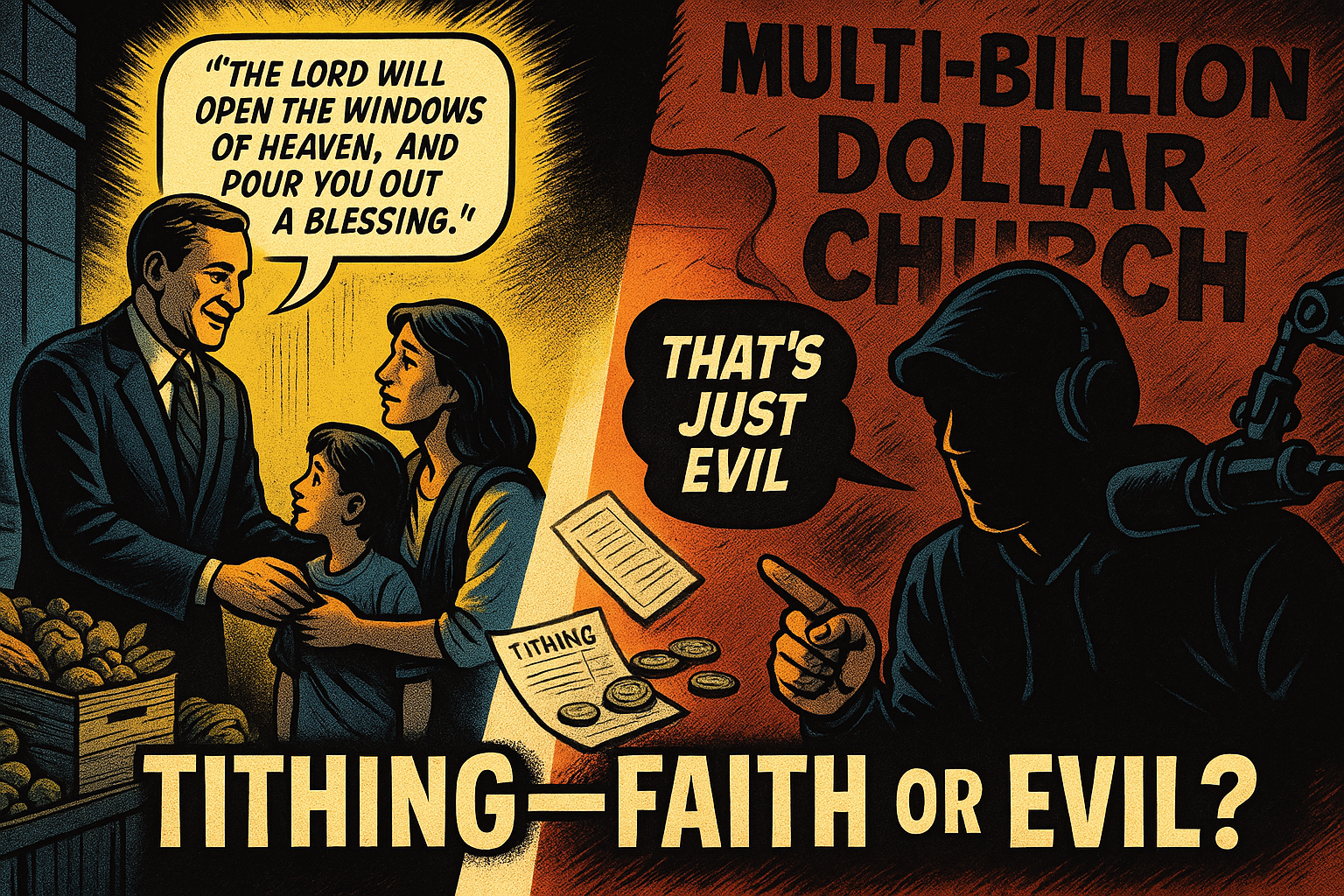
“You’re giving this multi-billion dollar church your 10%. Food or tithing — pay tithing. How can you say that with a straight face? That’s just evil.” — Narrator, 00:56:05 |
| Core Claim |
The Church’s tithing doctrine causes harm to the poor and is morally evil. |
| Conclusion |
Emotional Assertion / Intentionally Misframed Doctrine |
🔍 Core Findings
The narrator calls the Church’s tithing doctrine “evil” — but leaves out the spiritual framework, the voluntary nature of tithing, and the welfare resources available to every member. It’s not coercion — it’s consecration. And the Church teaches both sacrifice and support.
📖 What the Church Actually Teaches
- Tithing is voluntary and confidential.
- Bishops are trained to help anyone in need, regardless of donation history.
- Members are not denied food, rent, or employment support because they don’t tithe.
📖 Scriptural Principle
“The Lord will open the windows of heaven… and pour you out a blessing.”
— Malachi 3:10
To believers, tithing is a spiritual act of trust — not a contract. You may disagree with that faith, but calling it “evil” ignores what it actually means to the people who live it.
📚 Sources
by Anonymous | Aug 9, 2025 | Church Leaders
Bottom Line
Joseph F. Smith’s legal testimony deserves scrutiny—not slander. Disagree with his tone or decisions, but do not accuse him of perjury without proof.
| Podcast |
Mormon Stories – John Dehlin |
| Episode |
“New Document Shows LDS Church Hid and Denied its own Prophet’s Polygamy Revelation” |
| Category |
Church Leadership Integrity |
| Quote |
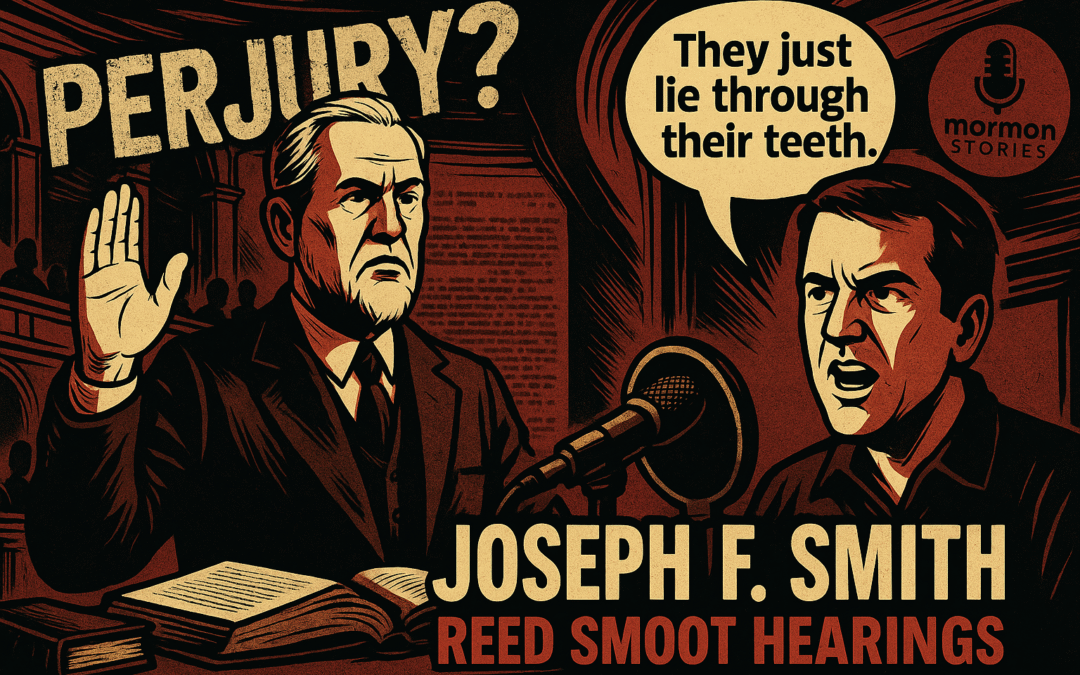
“They subpoena Mormon leaders to go back to Washington… and under oath they have to talk about polygamy and they don’t want to and they dance around it. They play semantic games and sometimes honestly they just lie through their teeth.” — Narrator, 01:00:39–01:01:06 |
| Core Claim |
Joseph F. Smith lied under oath during the Reed Smoot hearings. |
| Conclusion |
Defamatory Risk / Misleading |
| Logical Questions |
- Was Joseph F. Smith ever charged with perjury?
- What did his actual testimony include?
- How is cautious legal language different from falsehood?
|
🔍 Core Finding
The claim accuses Joseph F. Smith of criminal dishonesty in a federal hearing—without presenting evidence. This raises potential defamation concerns. Legal transcripts of the Reed Smoot hearings show that Smith answered questions carefully but directly under oath, reflecting the sensitive nature of polygamy history and institutional responsibility.
Church leaders at the time faced intense scrutiny from government and press alike. Ambiguity in testimony is not equivalent to lying unless proven false and intentional. No court or official ever ruled Smith perjured himself, nor was he charged with such.
⚖️ Legal vs. Narrative Accuracy
- Testimony was cautious but within legal bounds.
- No legal body found him guilty of perjury or misleading Congress.
- Charging someone with “lying through their teeth” without evidence is reputationally and legally reckless.
📚 Sources
by Anonymous | Aug 9, 2025 | Church Conspiracy
Bottom Line
To claim that missionaries “don’t want full informed consent” is spiritually cynical and doctrinally untrue. The gospel invites faith, not frontloading. Missionaries teach with spiritual integrity under priesthood keys. Converts are responsible for their own seeking, prayer, and confirmation.
| Podcast |
YouTube – “Sister Grenfell” (Ex-Missionary Creator) |
| Episode |
Everything Mormon Missionaries DON’T Tell You |
| Category |
Missionary Practices / Alleged Concealment |
| Quote |
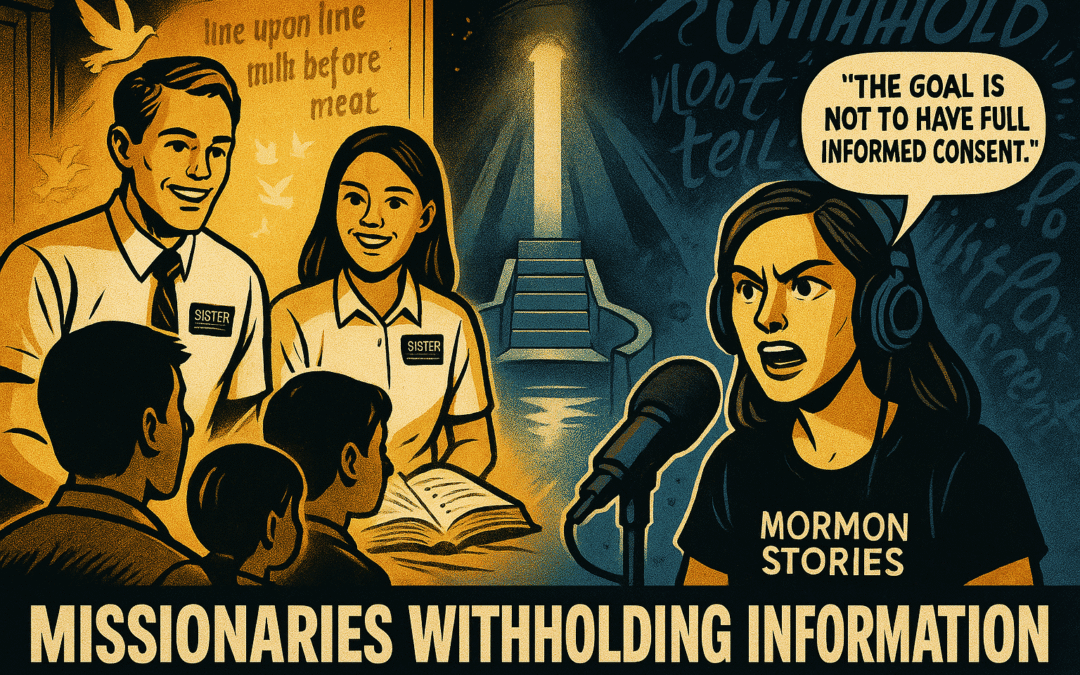
“And so all of that is important to share. so that you can understand that a missionary’s goal is to get you baptized… It’s not to explain everything about the church. The goal is not to have full informed consent.” — “Sister Grenfell”, 00:04:59–00:05:10 |
| Core Claim |
Missionaries deliberately avoid teaching full doctrine or “informed consent” and are primarily focused on securing baptisms quickly, potentially misleading converts. |
| Conclusion |
Misleading |
| Logical Questions |
- Does Preach My Gospel explicitly instruct missionaries to withhold information?
- What is the “milk before meat” principle and is it deceitful?
- Are converts truly uninformed at baptism, or are they introduced progressively in line with scriptural precedent?
|
🔍 Core Finding
📘 Do Missionaries Fast-Track Without Full Consent?
No. Preach My Gospel outlines a principle-based teaching framework where spiritual preparation and doctrinal understanding are nurtured line upon line (Isaiah 28:10, D&C 19:22). The focus is on spiritual readiness, not deceptive omission.
🥛 Meat Before Milk — Scriptural Not Secret
The “milk before meat” principle originates in scripture (1 Corinthians 3:2; Hebrews 5:12–14). Even Jesus withheld deeper teachings from disciples until they were spiritually ready (John 16:12). This is not deception — it’s sacred pacing.
🧾 Informed, Not Overloaded
Missionaries are not university professors giving a full religious dissertation. They are guides, introducing foundational principles as taught by Christ (faith, repentance, baptism). Conversion requires personal study, prayer, and spiritual confirmation — not academic overload (Moroni 10:4–5).
⚖️ Is it Informed Consent?
Yes — baptismal candidates must:
- Attend church multiple times
- Meet with missionaries and local leaders
- Affirm belief in restored gospel, commandments, and the Savior
- Pass a formal interview on commandments including tithing, chastity, Word of Wisdom, and sustaining Church leaders
All outlined in General Handbook 38.2.1.
📚 Sources
by Anonymous | Aug 9, 2025 | Joseph Smith
Bottom Line
The claim that Joseph equated himself with divine rulership is a distortion. The text plainly exalts Christ, not Joseph. This is scripture misrepresented as ambition.
| Podcast |
Mormon Stories – Joseph Smith Podcast |
| Episode |
Ep. 2046 – John Turner Pt. 9 |
| Category |
Prophetic Authority & Revelation Misrepresentation |
| Quote |
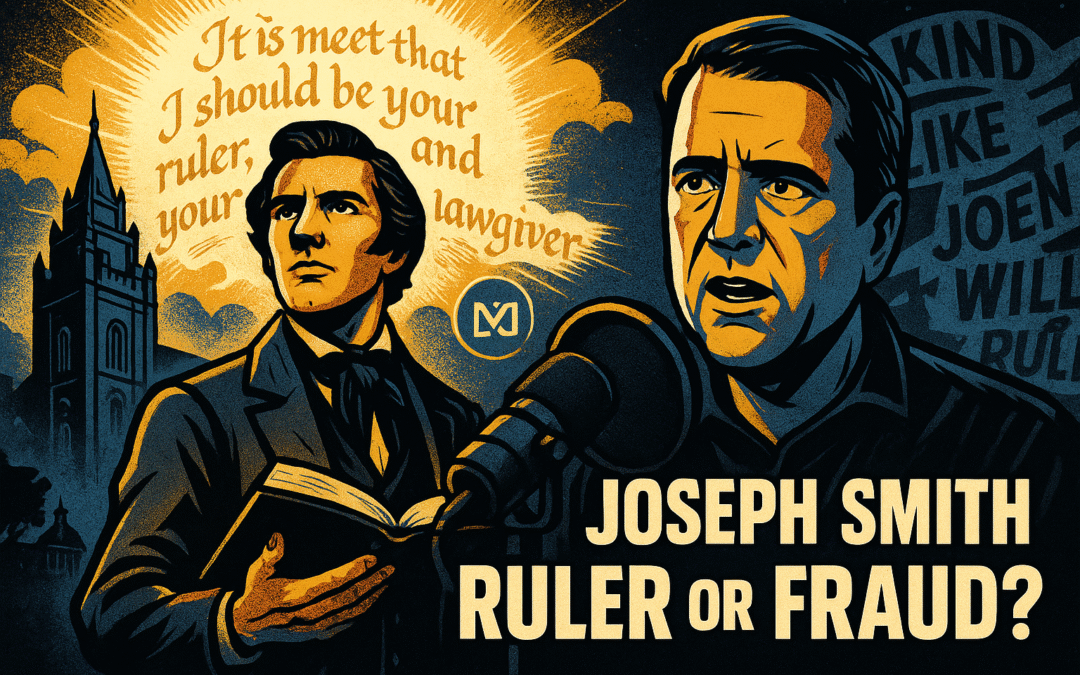
“He receives a revelation basically where he says he has Jesus saying, ‘I will be your ruler’ … it’s kind of like Joseph saying, ‘I will be your ruler.’ … That combined with ‘I am Joseph the prophet.’ That’s a level of hubris…” — John Dehlin, 00:36:29–00:38:29:contentReference[oaicite:0]{index=0} |
| Core Claim |
Joseph Smith used divine revelation as a mask for personal power, equating “Jesus will be your ruler” with “Joseph will be your ruler.” |
| Conclusion |
False / Rhetorically Misleading |
| Logical Questions |
- Is the “I will be your ruler” phrase directly from Jesus Christ in canonized scripture?
- Does the context of the revelation support Dehlin’s inference?
- Is there a pattern in Joseph’s early revelations that shows consolidation of personal power?
|
🔍 Core Finding
This quote grossly distorts the meaning of Doctrine and Covenants 41:4, which reads:
“He that receiveth my law and doeth it, the same is my disciple… for it is meet that I should be your ruler, and your lawgiver.”
— D&C 41:4
The speaker is Jesus Christ, not Joseph Smith. The verse continues a scriptural tradition of divine kingship:
- Isaiah 33:22: “The Lord is our king.”
- Mosiah 2:19: “Ye are eternally indebted to your heavenly King.”
- 2 Nephi 10:14: “He that fighteth against Zion… shall be as a garment in a furnace of fire.”
Joseph’s leadership followed a revealed structure, with checks and ratification by councils and membership. D&C 28:2 makes clear:
“No one shall be appointed to receive commandments and revelations in this church excepting my servant Joseph Smith, Jun.”
— D&C 28:2
Bottom Line
The claim that Joseph equated himself with divine rulership is a distortion. The text plainly exalts Christ, not Joseph. This is scripture misrepresented as ambition.
📚 Sources
by Anonymous | Aug 9, 2025 | Church Leaders
1933 First Presidency Statement
Bottom Line
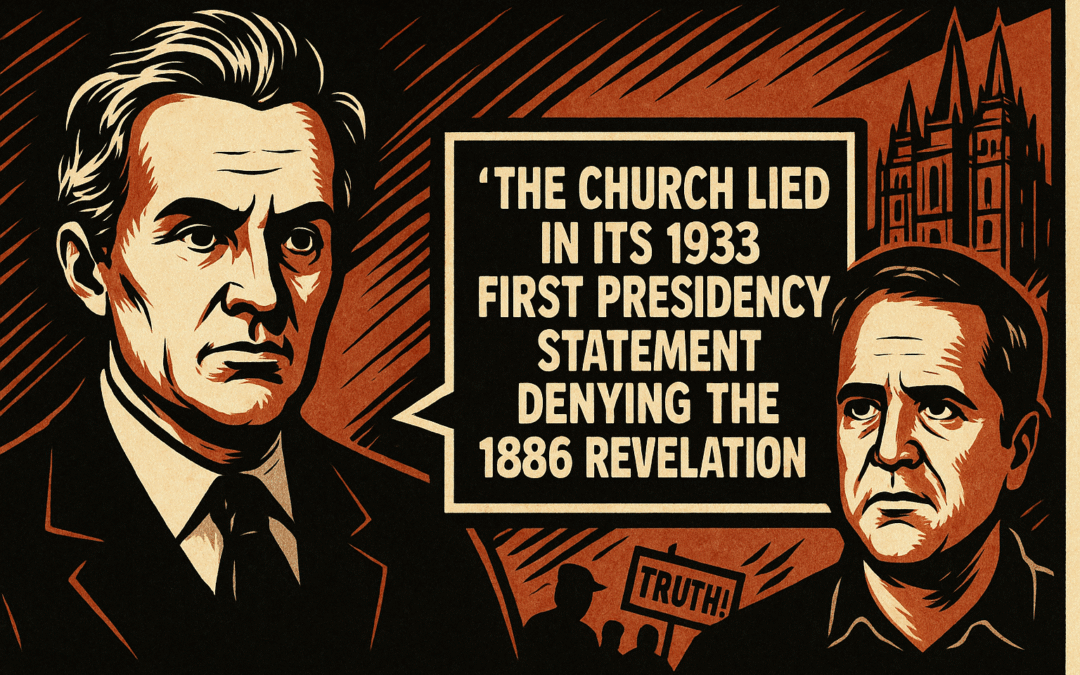
A poorly worded official statement isn’t proof of lies. Public policy is established by canon—not by retroactive accusations or ideological frustration. The Church lied in its 1933 First Presidency statement denying the 1886 revelation”
| Podcast |
Mormon Stories – John Dehlin |
| Episode |
“New Document Shows LDS Church Hid and Denied its own Prophet’s Polygamy Revelation” |
| Title |
“The Church lied in its 1933 First Presidency statement denying the 1886 revelation” |
| Category |
Institutional Transparency & Doctrine |
| Quote |
“This is one of the biggest whoppers ever told by church leaders… Unambiguously this was a very terrible idea.” — Narrator, 01:21:37–01:21:55 |
| Timestamp |
01:21:37–01:21:55 |
| Core Claim |
The Church knowingly lied about the 1886 revelation in the 1933 First Presidency statement. |
| Conclusion |
False Accusation / Misleading Framing |
| Logical Questions |
- Was the 1886 revelation known and authenticated by Church leaders in 1933?
- Does public release equal doctrinal adoption?
- Can mistaken or strategic language be equated with intentional lying?
|
🔍 Core Finding
The 1933 First Presidency statement, drafted by J. Reuben Clark, expressed skepticism about the doctrinal relevance of the 1886 revelation. While the phrasing may have downplayed its existence or status, there’s no verifiable evidence of intentional deceit.
The revelation was never canonized, never presented for common consent, and never treated as binding doctrine by the Church. Leaders are not required to treat every private document—however authentic—as public doctrine. The Church’s statements aimed to protect its position against schismatic interpretations, not hide scripture.
⚖️ Doctrine by Common Consent
- No revelation is binding until sustained by the Church as a whole (D&C 26:2).
- The 1886 revelation remained non-canonical for nearly 150 years.
- Canon omission ≠ coverup; doctrinal restraint is not deception.
📚 Sources