by Anonymous | Aug 9, 2025 | Doctrines Policy Practice
Ancient Temple Traditions and the Latter-day Saint Temple Ceremony
Abstract: This paper explores the origins, structure, and theological claims of the Latter-day Saint (LDS) temple ceremony, particularly the Endowment, in comparison with ancient Israelite and early Christian temple traditions. It incorporates scholarship from both LDS and non-LDS sources, including the work of Margaret Barker, and evaluates common critiques against the LDS temple experience from a doctrinal, historical, and psychological perspective. The paper ultimately argues for a pattern of restoration that connects modern LDS temple worship with ancient sacred traditions and practices.
Introduction
The temple holds a central place in Latter-day Saint theology and worship. Yet for many modern Christians—and especially former members of the Church of Jesus Christ of Latter-day Saints—the temple ceremony can seem unfamiliar, unnecessary, or even troubling. This study aims to evaluate whether the LDS temple ceremony is grounded in historical religious practices and if it is, as Latter-day Saints claim, a restoration of ancient ordinances and symbols.
1. Ancient Israelite Temple Worship
Temple rituals in ancient Israel involved washings, anointings, sacred clothing, covenants, and access restrictions to sacred spaces. The High Priest entered the Holy of Holies once a year, wearing white linen and performing sacrificial atonement (see Leviticus 16). These forms find reflection in the LDS temple, especially in the Initiatory and Endowment rituals.
Scriptural references: Exodus 28–30; Leviticus 16; 2 Chronicles 3–5.
2. Margaret Barker and the First Temple Tradition
Methodist scholar Margaret Barker has posited that King Josiah’s reforms around 623 BCE removed elements of Israel’s older temple theology—such as the divine feminine (Asherah), visionary ascent theology, and the role of the High Priest as a mediator figure. Barker’s work has been received positively by many LDS scholars due to its alignment with Latter-day Saint temple doctrines, including belief in a Heavenly Mother and sacred rituals as a means of ascending into the divine presence.
Barker’s key texts: The Older Testament, Temple Theology, Great High Priest.
3. Josiah’s Reforms: Loss or Purification?
2 Kings 22–23 describes Josiah’s purge of high places and the “discovery” of a lost book of the law, which many scholars identify as an early version of Deuteronomy. Barker argues that these reforms may have suppressed legitimate temple teachings such as wisdom traditions, anointing rites, and the divine feminine. LDS scriptures such as the Book of Mormon claim that “plain and precious” truths were taken from ancient records (1 Nephi 13).
4. Early Christianity and Temple Imagery
Early Christians saw Jesus as the new High Priest (Hebrews 9–10), and the temple veil’s tearing as symbolic of broader access to God—not the end of ritual or sacred space. Many early Christian communities maintained liturgical practices, including washings (baptism), anointings (chrism), sacred meals (Eucharist), and even marriage as a sacred rite (see Gospel of Philip).
Early Christian texts such as the Acts of John and other apocryphal writings describe prayer circles, ritual clothing, sacred names, and esoteric instruction—patterns echoed in the LDS Endowment.
5. Latter-day Saint Temple Worship: Restoration or Innovation?
Joseph Smith introduced the Endowment in 1842. Critics note similarities to Freemasonry, which Smith had recently joined. However, LDS leaders and scholars argue that Freemasonry preserved degraded fragments of ancient temple ritual, and that Joseph Smith received revelatory restoration of their original spiritual purpose. Core LDS temple covenants—obedience, sacrifice, chastity, and consecration—are not found in Masonic rites and align more closely with biblical covenants.
6. Modern Criticisms and Responses
a. The Veil Was Rent
Many Christians argue that Christ’s death made temples obsolete. LDS theology agrees that the veil’s tearing symbolizes open access to God—but contends that sacred ordinances and covenants still structure the process of entering His presence.
b. Masonic Influence
While Freemasonry and the LDS temple share superficial elements, the purpose, theology, and symbolic meaning differ significantly. Ritual washings, anointings, garments, and sacred handclasps appear in ancient texts independently of Masonry.
c. Changes Over Time
The temple ceremony has been adapted—most notably in 1990 and 2019—but the core doctrines and covenants remain unchanged. This aligns with the LDS belief in continuous revelation and is consistent with biblical precedent (e.g., Acts 15, changes to circumcision and dietary laws).
d. Secrecy and Psychological Objections
Critics sometimes describe the temple as secretive or emotionally challenging. Latter-day Saints understand temple teachings as sacred rather than secret, drawing on early Christian principles of the disciplina arcani. LDS leaders have also responded to valid concerns, making adjustments to improve clarity and inclusion (e.g., gendered language revisions in 2019).
7. Do the Parallels Prove Antiquity?
No one ancient source contains all elements of the LDS Endowment, but a constellation of practices—washings, anointings, priestly clothing, sacred names, ritual ascent, and symbolic marriages—do appear across ancient Judaism, Christianity, and early mystery traditions.
The cumulative case made by LDS scholars (e.g., Hugh Nibley, Jeffrey Bradshaw, David Calabro) is that these parallels support—not prove—the temple’s ancient roots. Margaret Barker’s independent findings further strengthen the plausibility of restoration claims.
Conclusion
The LDS temple ceremony stands at the crossroads of ancient and modern, ritual and revelation. Though modern audiences may find it foreign or challenging, its core elements—covenant, purification, symbolic ascent, and eternal union—mirror the most sacred traditions of the ancient world.
While gaps in historical continuity remain, the temple endowment exhibits unmistakable resonance with the sacred drama of temples past. Whether viewed as symbolic, psychological, or revelatory, the LDS temple invites all to ponder this ancient question anew: What does it mean to come into the presence of God?
References (Selected)
- Barker, Margaret. The Gate of Heaven: The History and Symbolism of the Temple in Jerusalem. SPCK, 1991.
- ———. The Great High Priest: The Temple Roots of Christian Liturgy. T&T Clark, 2003.
- Dever, William. Did God Have a Wife? Eerdmans, 2005.
- Bradshaw, Jeffrey M. Temple Themes in the Book of Moses. Interpreter Foundation, 2014.
- Hamblin, William J. “Vindicating Josiah.” Interpreter, Vol. 4, 2013.
- Nibley, Hugh. Temple and Cosmos. Deseret Book, 1992.
- Gospel of Philip (Nag Hammadi Codex II,3), trans. Wesley Isenberg.
- Hebrews 9–10; Exodus 28–30; 2 Kings 23; 1 Corinthians 15:29.
- Interpreter Foundation, FAIR, Encyclopedia of Mormonism (Prayer Circle), LDS General Handbook (2020–present).
by Anonymous | Aug 9, 2025 | Doctrine, Doctrines Policy Practice, Joseph Smith
Executive Brief: Did Joseph Smith Practice Polygamy?
Core question: Did Joseph Smith
begin the practice of plural marriage, or did Brigham Young introduce it after
Joseph’s death?
⏳
Timeline Overview
- 1830–1835: Public monogamy;
possible sealing to Fanny Alger.
- 1841–1844: Joseph secretly seals
to 30+ women in Nauvoo. D&C 132 dictated in 1843.
- June 1844: Nauvoo Expositor
exposes polygamy. Joseph and Hyrum killed.
- 1852: Brigham Young announces
polygamy and publishes D&C 132.
- 1860: RLDS founded under Joseph
Smith III, denying Joseph practiced polygamy.
📚
Evidence That Joseph Smith Originated Polygamy
- D&C 132: Dictated July 12, 1843 by Joseph Smith; scribed by William Clayton. Validated
by Clayton, Hyrum Smith, and Kingsbury.
- Plural Wives: Sealed to 29–33
women including Eliza R. Snow, Emily Partridge, Helen Mar Kimball. (Compton, Hales)
- Sexual Relations: Emily Partridge
and Melissa Lott testified under oath to conjugal relations with Joseph.
- Church Acknowledgment: The LDS
Church confirmed Joseph practiced polygamy in the 2014 Gospel Topics essay.
- Scholarly Consensus: Confirmed by
Bushman, Compton, Hales, and even modern RLDS historians.
🔍
The Case That Brigham Young Originated or Exaggerated Polygamy
- Public Denials: Joseph publicly
said he had only one wife, even weeks before his death.
- Emma Smith: Denied Joseph ever
practiced or taught polygamy.
- RLDS Tradition: Joseph Smith III
gathered affidavits supporting his father’s innocence.
- D&C 132 Skepticism: Not
published until 1852. Survives only in copies. Edits by Willard Richards raise
timeline questions.
- Scriptural Conflicts: Book of
Mormon (Jacob 2:24) and Joseph’s JST edits condemn David & Solomon’s plural
marriages.
📊
Comparative Analysis
| Category |
Joseph Started It |
Brigham Invented It |
| Historical Evidence |
Dozens of journals, affidavits, and sealing records |
No
contemporary documents from Joseph; D&C 132 published
posthumously |
| Witness Testimony |
Emily Partridge, Malissa Lott, Eliza Snow, William
Clayton |
Emma
Smith, Joseph Smith III, William Marks, RLDS statements |
| Church Position |
LDS
acknowledges Joseph introduced it |
RLDS
originally denied it, now acknowledges it historically |
| Conspiracy Burden |
No
whistleblowers from 70+ alleged participants |
Requires massive, silent conspiracy by Brigham and all Utah
leaders |
| Scriptural Support |
D&C 132, patriarchal precedents |
Jacob 2, JST changes, 1835 D&C monogamy clause |
Conclusion: What We Know and What Remains Uncertain
We know:
- Joseph
Smith secretly practiced polygamy in Nauvoo.
- Brigham
Young openly continued and expanded it in Utah.
- The LDS
Church affirms Joseph’s involvement; RLDS once denied it but later conceded to
the evidence.
Uncertain:
- Joseph’s
private feelings and motivations
- Whether
all sealings were consummated
- Emma’s
true level of knowledge and emotional coping
- Why no
children resulted from plural unions
“Joseph Smith did
practice plural marriage—even if he kept it secret. Brigham Young didn’t invent
it; he exposed it. That’s what the evidence shows.”
Want more?
by Anonymous | Jul 28, 2025 | Church Leaders
Bottom Line
This is theological fiction repackaged as history. McKay’s testimony was firm. Nibley’s writings were firm. The idea that the Book of Mormon was merely authored by Joseph Smith is not supported by any contemporary Church documentation. If it were true, Nibley or McKay’s journals would say so. They do not.
| Podcast |
Radio Free Mormon |
| Episode |
409 |
| Category |
Book of Mormon Historicity / Leadership Faith |
| Quote |
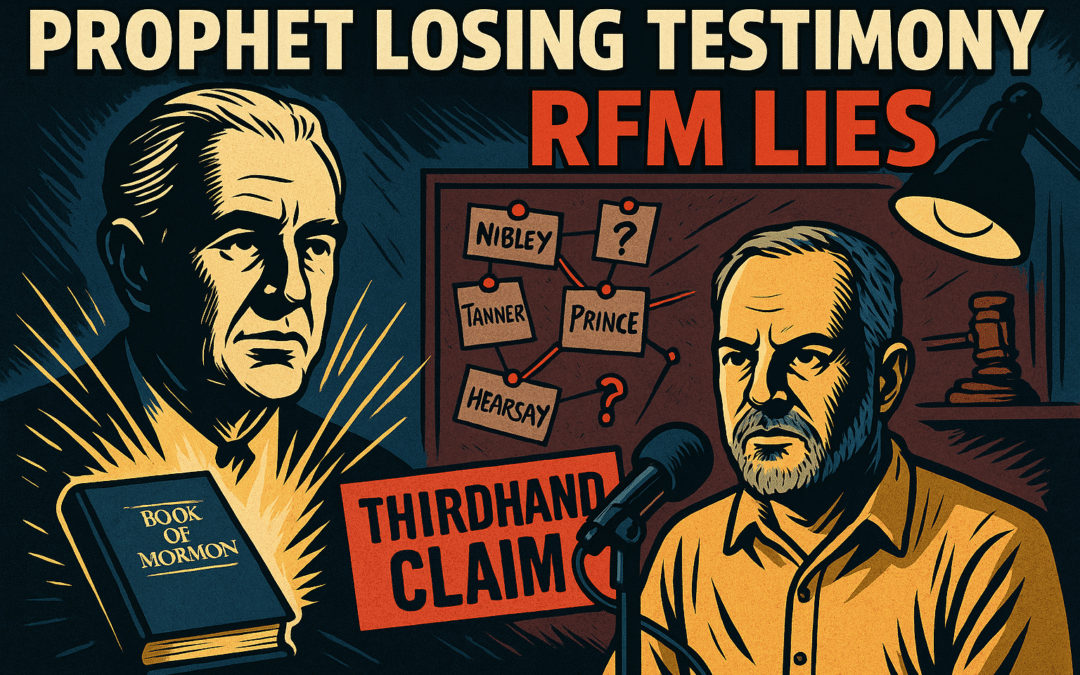
“David McKay told Hugh Nibley that, ‘Well, we already know that Joseph Smith wrote the Book of Mormon.'” — RFM quoting Gregory Prince quoting Hugh Nibley (Gregory Prince Interview, 00:08:00–00:08:35) |
| Core Claim |
David O. McKay privately confessed disbelief in the Book of Mormon’s ancient origins to Hugh Nibley. |
| Conclusion |
Misleading / Conjectural / Unverifiable |
| Logical Questions |
- Is this quote from David O. McKay documented firsthand?
- Was the conversation verified beyond Nibley’s secondhand, posthumous retelling?
- Does any public or private writing from McKay contradict this?
|
🔍 Core Finding
This quote is a thirdhand hearsay anecdote: Gregory Prince interviewing Hugh Nibley in 1995 about a conversation from the 1960s. The comment was allegedly shared only after Nibley asked Prince to turn off the recorder, then repeated with vague phrasing. There is no documentation in McKay’s journals, First Presidency minutes, or public sermons that supports the idea he rejected the Book of Mormon’s divinity.
Meanwhile, Nibley continued his vigorous public defense of the Book of Mormon throughout the rest of his life—publishing books, teaching at BYU, and never recounting this incident. O.C. Tanner’s influence is exaggerated and conjectural. The idea that McKay reversed lifelong beliefs due to Tanner is narrative embellishment.
📆 Documentary Silence vs. Doctrinal Certainty
- McKay bore testimony of the Book of Mormon repeatedly in Conference and private interviews.
- The claim has no support in firsthand writings or verified audio.
- Nibley’s own writings contradict the idea that he believed McKay denied scripture.
🤖 Statement Against Interest? Or Misremembered?
Podcast host RFM cites legal hearsay exceptions to suggest this is trustworthy. But courts require corroboration. This lacks any. No independent evidence. No diary entry. No tape. And it appears decades after McKay’s death.
📚 Sources
⚠️ Manipulation & Logic Check
- Fallacy: Argument from Silence – Absence of denial is treated as evidence of belief change.
- Fallacy: Guilt by Association – Links McKay to Tanner with no evidence.
- Rhetorical Manipulation: Anecdotal elevation, authority laundering through Prince/Nibley names.
🚨 Defamation & Legal Risk Layer
Although McKay is deceased, the claim borders on “false light” misrepresentation. It assigns beliefs to him contrary to all known public statements. The claim lacks due diligence and presents potential reckless disregard for factual accuracy.
by Anonymous | Jul 23, 2025 | Church Finances
Bottom Line
This isn’t about whether the Church can have wealth. It’s about whether it will honor God in how it stewards that wealth. Legal strategies matter—but moral accountability matters more. Members deserve not only reassurance, but real transparency. And the Lord, if He truly leads the Church, requires nothing less.
The LDS Church, the SEC Fine, and the Shell Companies: A Spiritual and Practical Analysis
📜 The Background
In February 2023, the U.S. Securities and Exchange Commission (SEC) fined Ensign Peak Advisors (EPA)—the investment arm of The Church of Jesus Christ of Latter-day Saints—$4 million, and the Church itself $1 million. The SEC found that from 1997 to 2019, Ensign Peak used 13 shell LLCs to file misleading investment disclosures, effectively concealing the true size and identity of the Church’s investment portfolio (then worth over $30 billion; now estimated near $100 billion). The Church settled without admitting wrongdoing.
The SEC’s report states the Church went to “great lengths” to avoid disclosure, a phrase many critics interpret as confirming systemic deception.
🧭 LDS Doctrine on Honesty and Obedience to Law
Latter-day Saints hold honesty as a sacred covenantal principle, not just an ethical guideline. It’s embedded in:
- Temple recommend interviews: “Are you honest in your dealings with your fellow men?”
- Articles of Faith #12 & #13: “We believe in being honest, true, chaste…”
- Scripture:
- D&C 134:6 – “We believe that all men are bound to sustain and uphold the respective governments in which they reside.”
- Alma 27:27 – “They were distinguished for their zeal… and their honesty.”
Thus, when an institution that proclaims divine guidance is caught violating federal disclosure laws—even civilly—it invites spiritual scrutiny as well as public criticism.
🧠 Why the Church Did It: The Institutional Logic
The Church has stated that it sought to:
- Preserve the sanctity of sacred funds by avoiding public scrutiny and speculation.
- Protect donor privacy to discourage targeting or harassment.
- Prevent manipulation or market distortion caused by public knowledge of its financial footprint.
In effect, the Church was using perfectly legal strategies—until the SEC ruled that the intent behind those strategies constituted misleading conduct under securities law.
🛡️ The Legal Line Crossed
- Using LLCs to manage investments is not inherently illegal.
- But intentionally masking control and beneficial ownership over $100 billion in assets year after year violated SEC transparency rules.
- Once exposed, Ensign Peak began filing properly in 2020 and settled the case civilly.
🙏 Spiritual Analysis: Where the Church Fell Short
Despite legal motivations, the spiritual concern is this:
⚖️ Intent matters. So does perception.
Even if Church lawyers believed they were acting within the law, the intent to obscure violates the higher law of moral honesty—especially for a Church that requires moral rectitude from its members.
Scriptures reinforcing this principle:
- Mosiah 2:22 – “He doth require that ye should do as he hath commanded you… and be honest.”
- 2 Corinthians 8:21 – “Providing for honest things, not only in the sight of the Lord, but also in the sight of men.”
🧎♂️ Shouldn’t the Lord’s Church Lead by Example?
Members pay tithing in faith, often at personal sacrifice. Discovering that their sacred funds were protected by a shell game—even if well-intentioned—has rightly provoked disappointment, anger, and demands for accountability.
💡 Why Did the SEC Fine Matter So Much?
- It confirmed long-standing suspicions about financial secrecy.
- It contrasted with the Church’s teachings about integrity.
- It revealed dissonance between global financial reality and local member experience.
🧭 The Best Defense: Context, Not Excuses
A fair rebuttal acknowledges the Church’s missteps but also frames the institutional context:
- The Church did not engage in fraud, embezzlement, or insider trading.
- It has since changed its practices and now complies with disclosure laws.
- No funds were lost or stolen.
- Intent was institutional privacy, not personal gain.
- All major religions use tax-exempt strategies to some extent.
But again—“To whom much is given, much is required.”
💬 Balanced Bottom Line
The LDS Church made a serious error in prioritizing financial opacity over transparency. Though not criminal, its legal workaround violated the spirit of its own doctrine on honesty. It must now earn back the trust of its members through transparency, humility, and clear accountability.
📖 Recommended Actions for the Church (Spiritually and Practically)
- Public repentance and acknowledgment, not just legal compliance.
- Detailed annual financial disclosures to members.
- Increase humanitarian aid and ward budgets.
- Model institutional integrity alongside personal virtue.
- Demonstrate that sacred funds serve sacred ends.
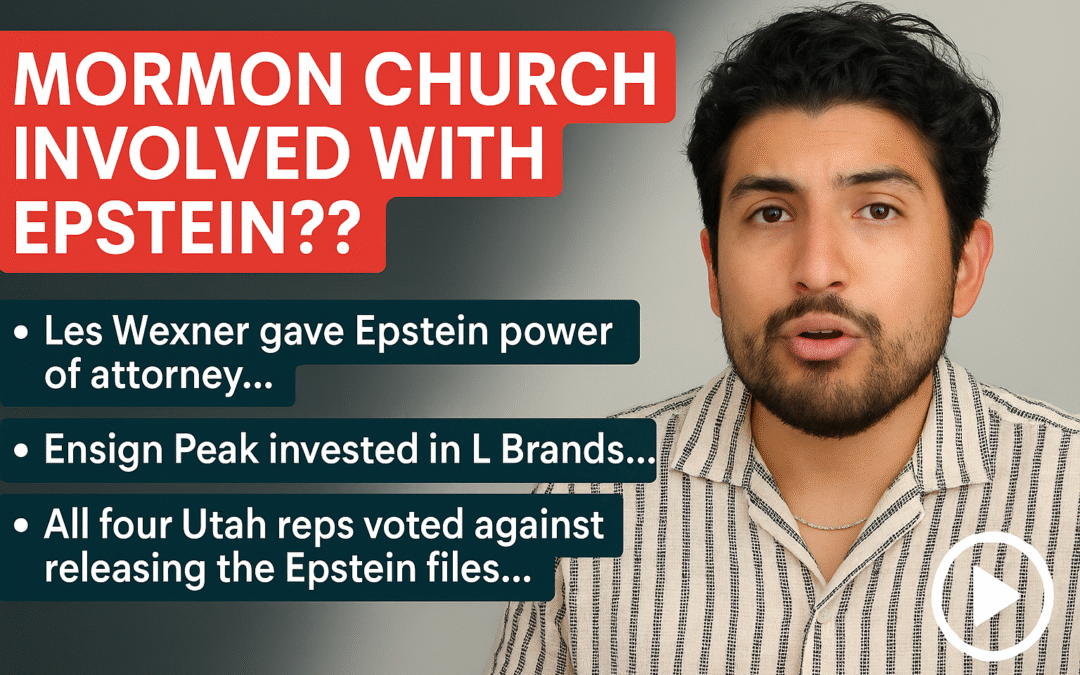
by Anonymous | Jul 23, 2025 | Church Conspiracy
Bottom Line
This TikTok attempts to frame the LDS Church as morally culpable through unrelated financial investments. It’s dishonest, manipulative, and disrespects the complexity of modern investment systems.
| Platform |
TikTok |
| Creator |
Jorge Lopez (@jorgesanch333z) |
| Category |
Financial Ethics & Political Manipulation |
| Quote |
“So most people don’t know that Les Wexner, the former CEO of L Brands… gave Jeffrey Epstein full power of attorney… And on top of that, Ensign Peak (Mormon Church) was an investor in L Brands… through shell companies… And all four Utah representatives voted against releasing the Epstein files… This is all so suspicious…” — Jorge Lopez, |
| Core Claim |
The LDS Church knowingly invested in L Brands (linked to Epstein) and covered it up via shell companies; Utah politicians helped hide Epstein’s crimes. |
| Conclusion |
Misleading / Guilt by Association Fallacy |
| Logical Questions |
- Did Ensign Peak knowingly support Epstein-linked entities?
- Were the shell companies criminal or standard investment structures?
- Do passive investments equate to moral complicity?
|
🔍 Core Finding
1. Passive ≠ Complicit. Ensign Peak manages billions across diversified portfolios like most institutional investors. No evidence supports the Church having operational control over L Brands or knowledge of Epstein’s conduct through Les Wexner.
2. “Shell Companies” were regulatory, not criminal. The Church’s 2023 SEC settlement confirms failure to file correctly—not illegal behavior. Many nonprofits and religious groups use intermediaries for privacy and protection.
3. L Brands ≠ Epstein. L Brands was a global brand. Wexner’s poor personal judgment doesn’t taint every shareholder. Claiming so is emotional misdirection and guilt by association.
4. Utah Reps ≠ Church Plot. The Epstein vote (Roll Call 136) split by party, not religion. LDS Church did not direct or lobby the vote. Utah Republicans often vote with national GOP strategy.
🧠 Manipulation & Logic Check
- Fallacy: Guilt by association (Church → Wexner → Epstein).
- Emotional trigger: Weaponizes Epstein’s crimes to imply institutional corruption without evidence.
⚠️ Defamation Risk
While not direct, the accusation pattern may rise to reckless implication. Linking a religion to crimes without evidence introduces reputational harm risk.
📚 Sources