by Anonymous | Jul 22, 2025 | Church Finances
Bottom Line
Quoting a devotional metaphor without its full spiritual context misrepresents both the doctrine and the practice. The Church teaches sacrifice — not starvation. And compassion is the rule, not cruelty.
| Podcast |
YouTube – Alyssa Grenfell |
| Episode |
“How the Mormon Church Secretly Built a $293 Billion Fortune” |
| Category |
Tithing Doctrine & Poverty |
| Quote |
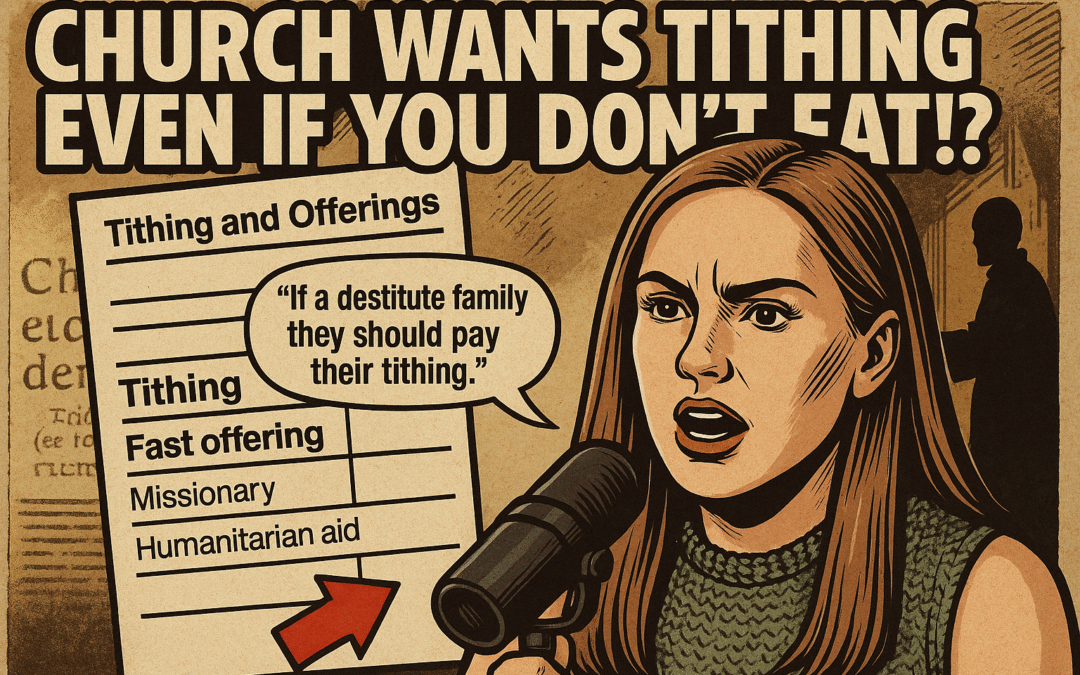
“If a destitute family is faced with the decision of paying their tithing or eating, they should pay their tithing.” — Narrator quoting Elder Lynn G. Robbins, 00:01:00 |
| Core Claim |
The LDS Church encourages starving members to pay tithing before buying food, regardless of personal need. |
| Conclusion |
Partial Truth / Doctrinally Isolated & Out-of-Context Quote |
| Logical Questions |
- Was this quote presented with full doctrinal context?
- Do bishops require tithing before giving aid?
- How does the Church treat struggling members?
|
🔍 Core Finding
The quote is real, but it’s not policy. Elder Lynn G. Robbins used it in a sermon to teach faith during hardship, not to promote starvation. The Church’s actual welfare system is built on feeding the hungry — not testing them.
📖 What Elder Robbins Actually Said
“If a destitute family is faced with the decision of paying their tithing or eating, they should pay their tithing.” “But they should also go to their bishop for help.”
— GC, Apr. 2005
🧾 Church Policy vs. Sermon Metaphor
- Bishops are instructed to help the poor regardless of tithing status.
- Tithing is voluntary and not enforced by penalty.
- Fast offerings and humanitarian funds exist to meet basic needs.
📚 Sources
by Anonymous | Jul 21, 2025 | Church Finances
Bottom Line
The SEC fine was real but not for fraud, theft or criminal deception. The violation was technical. The money was never hidden from Church leaders or misused. There was no fraud charge, no missing funds, and no accusation of wrongdoing toward Church members. This claim is a textbook case of exaggerating a filing error into a scandal.
| Podcast |
YouTube Alyssa Grenfell |
| Episode |
“How the Mormon Church Secretly Built a $293 Billion Fortune” |
| Title |
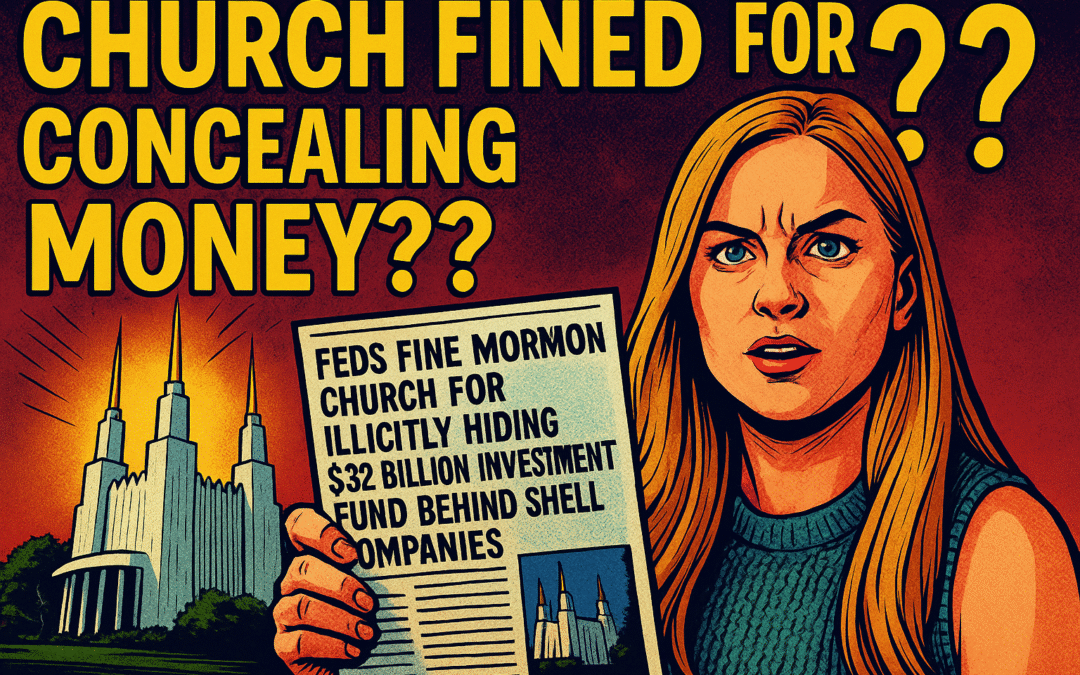
“The Church was fined for purposefully concealing its money” |
| Category |
Church Finance & Legal Reporting |
| Quote |
“The church was fined $5 million by the SEC, by the federal government, for purposefully concealing just how much money that they had.” |
| Timestamp |
00:04:12 |
| Core Claim |
The LDS Church was fined by the SEC for deliberately hiding its massive wealth from regulators and the public. |
| Conclusion |
Partial Truth / Framing Exaggeration |
| Logical Questions |
- Was the Church fined for concealing wealth?
- Did the SEC accuse the Church of fraud or misuse of funds?
- What was the actual reason for the fine?
|
🔍 Core Finding
Yes, the Church and Ensign Peak Advisors were fined $5 million by the SEC in 2023 — but not for concealing the amount of wealth they held. The fine was related to how they reported their holdings through shell LLCs, not for hiding money from members or regulators.
📊 What the SEC Actually Said
“The Church and Ensign Peak caused the Church’s investment portfolio to be misstated in 13F filings… The SEC’s order finds that the Church was aware of the use of shell companies and approved the structure.”
— SEC Press Release, Feb. 2023
The fine was for technical disclosure violations — not fraud, not misuse of tithing, and not for lying to members.
🧠 What the Narrator Gets Wrong
Saying the Church was fined for “purposefully concealing how much money they had” is a dramatic oversimplification. The SEC did not allege the Church was hiding total assets. It cited irregularities in how stock holdings were filed — using third-party LLCs to mask identity, not the amount.
📖 Church Response
“Ensign Peak and the Church have cooperated with the government… We affirm our commitment to comply with the law, regret mistakes made, and now consider this matter closed.”
— Church Statement, Feb. 2023
📚 Sources
by Anonymous | Jul 21, 2025 | Church Finances
Bottom Line
There’s no evidence the Church wanted to hide its reserves from members. It simply didn’t publish full balance sheets — a common religious practice. The rest is narrative spin. Without a verifiable quote, this framing falls apart.
| Podcast |
YouTube – Alyssa Grenfell |
| Episode |
“How the Mormon Church Secretly Built a $293 Billion Fortune” |
| Category |
Church Wealth & Financial Framing |
| Quote |
“The Mormon Church doesn’t want people to know that it controls $293 billion. It doesn’t want its own members to know. But now they do.” |
| Core Claim |
The LDS Church intentionally hid its $293 billion in financial holdings not only from the public, but from its own members. |
| Conclusion |
False / Conspiratorial Framing with Misleading Certainty |
| Logical Questions |
- Has the Church actively suppressed knowledge of its assets?
- Is there evidence that members were intentionally deceived?
- Was $293 billion confirmed or independently verified?
|
🔍 Core Finding
This claim assumes not only secrecy but intentional deception, which is not supported by any direct quote or evidence from Church leaders. The Church has long acknowledged its investments and reserves — what’s debated is the total amount, not the existence of funds.
💰 Transparency and Doctrine
The Church teaches financial self-reliance and has always encouraged members to save for the long term. Leaders such as President Gordon B. Hinckley and President Russell M. Nelson have repeatedly discussed wise financial preparation.
📊 Ensign Peak and the SEC
In 2023, the SEC fined Ensign Peak for disclosure violations — not for fraud or misuse. The Church settled and took responsibility for using shell companies to file required disclosures, but no member funds were misused, and the investment practices were legal.
📚 Sources
by Anonymous | Jul 21, 2025 | Book of Mormon
Bottom Line
The Book of Mormon records violence. But it doesn’t justify it. It mourns it. Its final prophet, Moroni, is a lone survivor — not a victor. Genocide isn’t glorified — it’s grieved. The message is clear: spiritual pride destroys civilizations. That warning still applies.
| Podcast |
YouTube Alyssa Grenfall |
| Episode |
“Evidence the Book of Mormon Is False” |
| Title |
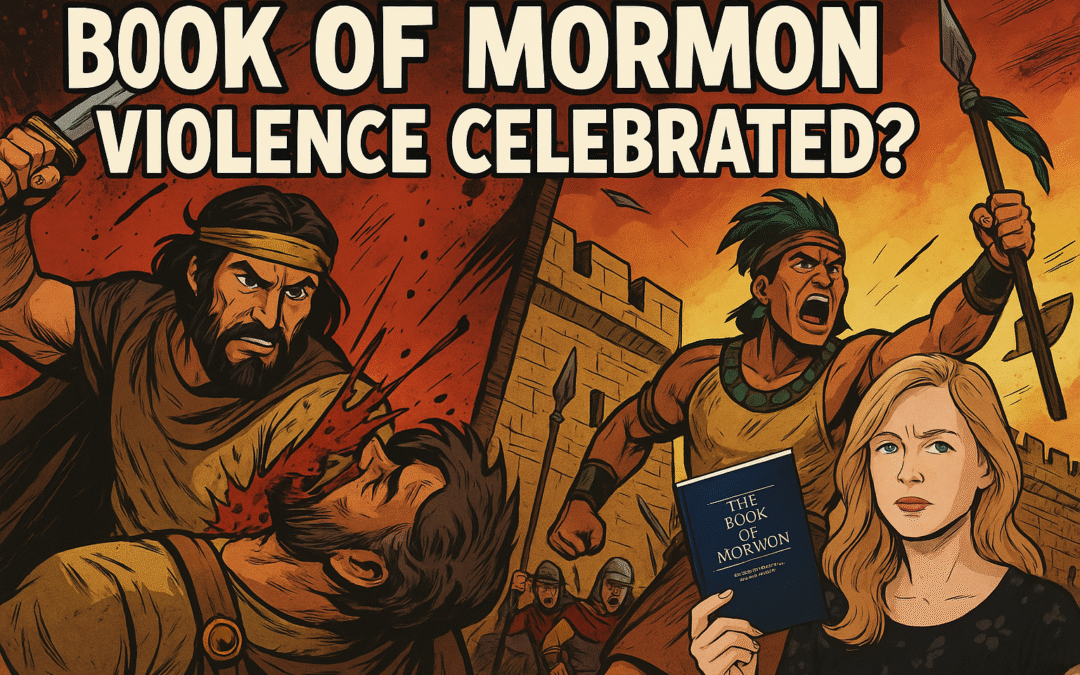
“The Book of Mormon promotes genocide and religious violence” |
| Category |
Ethical Objections & Narrative Themes |
| Quote |
“This is a book that glorifies genocide, warfare, and religiously justified killing. What kind of God commands you to slaughter entire civilizations?” — 01:39:12 |
| Core Claim |
The Book of Mormon is violent and morally repugnant — portraying God as sanctioning the slaughter of nonbelievers and glorifying military conquest. |
| Claim Type |
Partial Truth / Stripped of Context |
| Logical Questions |
- Does the Book of Mormon glorify violence or use it to teach moral principles?
- Are the wars described justified, lamented, or condemned?
- How does the narrative treat the humanity of the “enemies”?
|
🔍 Core Finding
Yes, the Book of Mormon contains warfare and destruction — but it never glorifies genocide. It portrays war as a tragic consequence of pride, rebellion, and moral decay. The final chapters are filled with mourning, not celebration.
“O ye fair ones, how could ye have departed from the ways of the Lord!”
— Mormon 6:17
🛡️ Wars Are Defensive, Not Aggressive
Captain Moroni is the model general — not a conqueror. He fights to preserve liberty and refuses to pursue bloodthirsty campaigns. The Anti-Nephi-Lehies lay down their weapons and refuse to fight. Mormon himself condemns the Nephites when they seek vengeance.
“I was forbidden to preach unto them… the Lord had withdrawn His Spirit.”
— Mormon 3:14–16
📖 Lamanites: Not Villains — Covenant People
- Samuel the Lamanite is a prophet.
- Multiple chapters promise the redemption of the Lamanites (2 Nephi 30:6, 3 Nephi 21).
- They are repeatedly described as beloved children of God — not enemies to be exterminated.
📚 Ancient Scripture Includes Violent History
The Bible contains divine judgments, battles, and destruction. The Book of Mormon mirrors that literary and theological tradition — using war to teach moral decay and prophetic justice, not to celebrate violence.
📚 Sources
by Anonymous | Jul 21, 2025 | Book of Mormon
Bottom Line
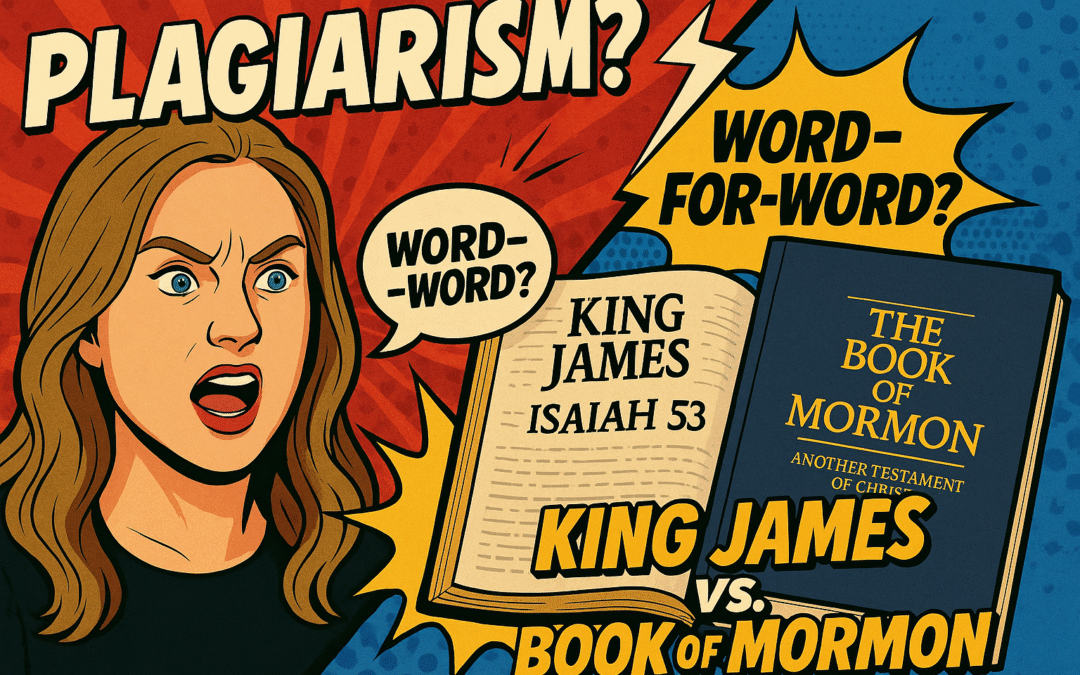
The Book of Mormon’s use of the King James Bible is open, intentional, and theologically consistent. It claims to be another witness of Christ — not a standalone scripture. If God spoke to Nephi and Isaiah, it makes sense their revelations would sound the same. That’s not plagiarism. That’s the pattern of scripture.
| Podcast |
YouTube Alyssa Grenfell |
| Episode |
“Evidence the Book of Mormon Is False” |
| Title |
“The Book of Mormon plagiarizes the King James Bible” |
| Category |
Translation & Textual Origin |
| Quote |
“Mosiah 14 is just a word-for-word copy of Isaiah 53. Third Nephi 13 copies Matthew 6 almost word for word. This is clearly plagiarism.” — 01:51:06 |
| Core Claim |
The Book of Mormon is a fraud because it contains long passages copied directly from the King James Version of the Bible. |
| Conclusion |
True (KJV Used) / Misrepresented Intent |
| Logical Questions |
- Does quoting the KJV Bible mean the Book of Mormon is fraudulent?
- What does the Book of Mormon claim about receiving the same revelations in different nations?
- How do Latter-day Saint scholars explain the use of KJV language?
|
🔍 Core Findings
Yes, the Book of Mormon includes extended quotations from the KJV Bible. Isaiah, Malachi, and Matthew are prominent examples. But the text explicitly says that God gives the same revelations to different nations — and these teachings are included intentionally, not deceptively.
“God speaketh the same words unto all nations.”
— 2 Nephi 29:8
The Book of Mormon even tells readers why Isaiah is quoted so extensively:
“I did liken all scriptures unto us, that it might be for our profit and learning.”
— 1 Nephi 19:23
🧠 Why the KJV Language?
Joseph Smith and his audience knew and revered the King James Bible. Using that language made the text spiritually familiar. Scholars like Royal Skousen argue that the translation came through revelation but used Joseph’s biblical register to express sacred ideas.
“Translation is not about word-for-word equivalence, but about expressing sacred meaning in the hearer’s language.”
— Royal Skousen, The Earliest Text
📝 What About Italicized Words and KJV Errors?
Yes, even KJV artifacts like italicized words show up. But that may reflect the Lord using the language Joseph knew best to transmit ideas. This matches how revelation often comes in the language and capacity of the receiver (see D&C 1:24).
🔄 Are Repeated Scriptures Always Plagiarism?
The Bible quotes itself repeatedly. Christ quotes Isaiah. Paul quotes Psalms. The New Testament repeats Old Testament prophecies word-for-word. Using earlier scripture doesn’t imply deception — it shows continuity of God’s voice.
📚 Sources
- Book of Mormon: Mosiah 14 (Isaiah 53), 3 Nephi 13 (Matthew 6), 2 Nephi 29:8, 1 Nephi 19:23
- Royal Skousen, The Book of Mormon: The Earliest Text, Yale University Press (2009)
- Grant Hardy, Understanding the Book of Mormon, Oxford University Press (2010)
- John W. Welch, “Why Does the Book of Mormon Quote the KJV?”, Ensign, Sept. 1977
- Mormoner.org – Bible Quotations in the Book of Mormon