LGBTQ suicidality: Latter‑day Saint (LDS) vs. broader LGBTQ and other religions
What we can (and can’t) measure today, and what the best available data say.
Scope: U.S. focus Population: youth & young adults Outcomes: ideation & attempts (not mortality)
Key Takeaways
No official statistic exists for an “LGBTQ LDS suicide death rate.” U.S. death certificates and national mortality surveillance do not routinely record sexual orientation, gender identity, or religion—so you cannot compute apples‑to‑apples death rates by SOGI and denomination with public data today. Any claim that a given faith’s LGBTQ members have a definitively higher/lower suicide death rate is not empirically testable at present. (peer‑reviewed overview)
Utah youth (grades 6/8/10/12): In representative state surveys, LGBQ youth who report an LDS affiliation show lower raw past‑year suicidality than LGBQ youth in other/no religions. In 2019 SHARP data, LGBQ LDS teens reported 28% serious consideration and 10% attempts, vs. higher attempt rates in several other affiliations (see table). After adjusting for family connection and drug use, most between‑religion gaps shrink or disappear—indicating those mediators drive much of the difference. A 2021 replication finds the same pattern. (BYU Studies analysis) · 2021 replication in Religions
Nationally, LGBTQ youth risk is much higher than for straight/cis peers. Recent CDC YRBS and Trevor Project surveys show roughly one‑third to two‑fifths of LGBTQ youth seriously consider suicide each year, and about 1 in 10–1 in 7 report an attempt; risk is highest among transgender and nonbinary youth. CDC YRBS 2013–2023 · Trevor 2023 · Trevor 2024
Religion’s role for sexual minorities is mixed and context‑dependent. For heterosexual youth, religiosity tends to be protective. For sexual minority youth/young adults, several studies find higher religious importance and non‑affirming settings are linked to higher odds of suicidality; affirming denominations (e.g., Unitarian Universalist) show lower odds than non‑affirming categories (e.g., “unspecified Christian,” Catholic, in one national college sample). Family acceptance—and avoiding religiously framed rejection—are strongly protective. Lytle 2018 · Blosnich 2020 · Trevor 2022 brief
Utah’s elevated overall youth suicide rate (all youth) aligns with broader regional factors (e.g., altitude, firearm access, rurality). CDC’s Epi‑Aid of the 2011–2015 spike concluded there was no single cause; multiple precipitating factors were identified. Altitude evidence · CDC prevention “technical package” · CDC MMWR Utah Epi‑Aid
What we can and cannot measure (and why it matters)
Deaths (mortality)
U.S. death certificates and most mortality systems do not capture sexual orientation, gender identity, or religion. That prevents credible, apples‑to‑apples death‑rate comparisons such as “LGBTQ LDS vs. LGBTQ non‑LDS” or “LGBTQ Catholic vs. Protestant vs. Jewish vs. Muslim.” Details.
Self‑reported thoughts and attempts
Large, representative youth surveys (e.g., CDC YRBS; Utah SHARP) measure suicidal ideation/attempts and sometimes include affiliation (“religion”). These are not death rates but are the best available for subgroup comparisons. CDC YRBS · BYU Studies analysis of Utah SHARP
Baseline: suicidality in the general LGBTQ population
U.S. high‑school students (YRBS 2021–2023): LGBTQ (LGBQ+) students report markedly higher persistent sadness/hopelessness, suicidal ideation, and attempts than straight/cis peers; patterns persist in 2023 trend data. YRBS 2011–2021 · YRBS 2013–2023
Trevor Project national surveys: Recent reports find about 41–45% of LGBTQ youth seriously considered suicide in the past year and ~14% attempted; risk is highest for transgender and nonbinary youth. 2023 report · 2024 report
Transgender adults (U.S. Trans Survey 2022): Lifetime suicidality remains extremely elevated; the 2022 report indicates 78% lifetime suicidal thoughts and 40% lifetime attempts, with family acceptance linked to lower risk. USTS 2022 Health & Wellbeing (2025)
Utah youth: LGBQ suicidality by religion (the clearest LDS‑specific data)
Data: Representative Utah SHARP surveys analyzed in a peer‑reviewed BYU Studies paper (2019 data) and replicated/extended in Religions (MDPI) using 2021 data (with transgender analyses). BYU Studies · MDPI Religions 2022
2019 Utah SHARP — unadjusted LGBQ youth suicidality by religious affiliation
Past‑year; grades 6/8/10/12. “Unadjusted” = raw percentages without controls. See BYU Studies (Model 1) and discussion of mediators.
What happens after controls?
When models add demographics, then family connection and drug use, most between‑religion differences shrink or become statistically non‑significant. In final models, LGBQ LDS youth differ little from other affiliations; the pattern implies family connection and lower substance use explain much of the raw gap. Replication & controls (2021 SHARP)
Bottom line for Utah youth
Across two large, representative datasets, LGBQ LDS‑affiliated youth do not show higher suicidality than their LGBQ peers in other affiliations; if anything, they start lower, and the differences are mostly explained by family connection and substance use rather than religion per se. BYU Studies · MDPI Religions (replication)
What about other religions/churches?
National evidence (young adults)
In a national study of college‑age young adults, sexual minority individuals in unspecified Christian and Catholic categories had higher odds of recent suicidal ideation than agnostic/atheist sexual minorities; Unitarian/Universalist sexual minorities had substantially lower odds than those unspecified Christian/Catholic groups. Interpretation: the affirming vs. non‑affirming religious context likely matters more than the presence of religion itself. Blosnich 2020
Importance of religion (youth & college samples)
Several studies report that greater personal importance of religion is associated with higher odds of suicidal ideation/attempt among sexual minority students—contrasting with its generally protective association among heterosexual peers. Lytle 2018
Using national LGBTQ teen data, one study found depression scores differed by religious upbringing and were strongly (inversely) associated with family acceptance; this is about depression (a strong correlate of suicidality), not suicide outcomes directly. Miller, Watson & Eisenberg 2020.
Outside the U.S. (illustrative)
A Dutch mixed‑methods study found sexual minority youth raised in Evangelical/Pentecostal homes reported more family stigmatization and suicidal ideation than those raised in Catholic or mainline Protestant homes—again underscoring that acceptance vs. non‑acceptance is the critical dimension. van Bergen et al., 2023.
Synthesis: Across religions, affirming vs. non‑affirming environments and family acceptance appear to be the main levers. Where faith communities and families are supportive, religion can be neutral or protective; where doctrine/practice fosters conflict, rejection, or pressure to change, risk rises. MDPI Religions (Utah replication)
Adults and LDS‑specific findings (limited but relevant)
“LGB Mormon paradox.” Using Utah BRFSS data, Cranney (2017) reported better self‑reported mental health among LGB Mormons than LGB non‑Mormons; this does not directly measure suicidality and may reflect selection effects. Journal of Homosexuality (2017)
A study of active vs. non‑active/former LDS sexual minorities found similar suicidal ideation on average, with religious struggles (e.g., internal conflict) tied to higher risk in both groups—again pointing to how religion is experienced rather than simple affiliation. Lefevor et al., 2022
Utah context: high overall suicide rates and confounders
A CDC/Utah investigation of the 2011–2015 youth suicide increase concluded there was no single cause; precipitating factors included mental‑health diagnoses, depressed mood, recent crises, history of ideation/attempt, and bullying. MMWR Utah Epi‑Aid
Reconciling influencer claims that LGBTQ LDS people have a “higher suicide rate”
Death‑rate claims are not evidence‑based under current U.S. data systems (no SOGI or religion on death certificates). A statement like “LGBTQ LDS have the highest suicide death rate” cannot be empirically validated with public mortality data today. Why
Survey evidence from Utah youth points the other way: unadjusted attempt/ideation rates are lower among LGBQ LDS youth vs. LGBQ peers in other/no religions; after adjusting for family connection and substance use, most differences fade—implying the mediators, not affiliation itself, explain the observed gap. BYU Studies (2019 data) · MDPI Religions (2021 replication)
National studies show that non‑affirming religious experiences and religious conflict are associated with higher suicidality among sexual minorities, while affirming settings are associated with lower risk. LDS families/wards vary widely in practice, which may explain why some LGBTQ LDS individuals report great harm and others report protection. Blosnich 2020 · Lytle 2018
Fair conclusion: With current data, no one can credibly claim that LGBTQ LDS people have a higher suicide death rate than other LGBTQ groups. In the best available Utah youth surveys, LGBQ LDS‑affiliated youth report lower raw suicidality than LGBQ youth in other/no religions, and after adjusting for family connection and substance use, differences mostly vanish. The quality of family/community support appears to be the main driver—not the LDS label itself. BYU Studies
Evidence‑based levers that lower risk (regardless of religion)
Family acceptance & reducing family conflict (especially avoiding religiously framed rejection) substantially reduce risk. Trevor (adult acceptance)
Affirming spaces (schools, peers, places of worship), anti‑bullying, and adult connectedness lower risk. CDC YRBS
Avoid “conversion” efforts. Exposure to sexual orientation/gender identity change efforts is associated with much higher suicidality. Utah now bans licensed conversion therapy for minors (rule in 2020; statute in 2023). Green et al., 2020 · Utah rule notice (2019; effective 2020) · Utah HB 228 (2023)
Reduce access to lethal means & address substance use—powerful, practical prevention strategies. CDC technical package
The most “apples‑to‑apples” comparison we can make today (Utah youth, 2019)
Unadjusted LGBQ youth past‑year suicidality by religion (grades 6/8/10/12):
Considered suicide: LDS 28% vs. Catholic 37%, Protestant 46%, Other 50%, None 49%.
Attempted suicide: LDS 10% vs. Catholic 26%, Protestant 25%, Other 30%, None 23%.
No direct death‑rate comparisons by SOGI and religion—we can’t test claims about suicide mortality for LGBTQ LDS vs. others with current U.S. death records. Why
Youth vs. adults: Most religion×SOGI analyses use youth/college surveys; adult evidence is thinner and mixed. Cranney 2017
Generalizability: The clearest LDS‑specific results are Utah‑specific; they may not generalize to LDS communities elsewhere. BYU Studies
Denominational granularity: Outside of a few categories (e.g., UU vs. unspecified Christian), U.S. data comparing specific denominations for sexual minorities remain limited. Blosnich 2020
Interpret carefully. Percentages above are self‑reported ideation/attempts, not death rates. Survey coverage, wording, and subgroup sizes vary; adult denominational evidence is sparser than youth evidence; Utah‑specific results may not generalize nationwide.
If you or a child is in immediate danger: Call 911. For confidential support 24/7, contact RAINN (800‑656‑HOPE). To report suspected child maltreatment in your state, see Child Welfare Information Gateway for numbers and guidance.
This white paper evaluates the U.S. policy and practice of The Church of Jesus Christ of Latter‑day Saints’ (“LDS Church”) abuse help line against victim‑safety standards used in health care, long‑term care, and peer faith communities. The central finding is that the LDS help line, as documented in court records and reporting, embeds structural features—routing through Risk Management, legal‑counsel gating, instructions to withhold identifying information, and routine destruction of call notes—that predictably prioritize institutional liability over rapid, trauma‑informed victim safety actions.1 These features conflict with the Church’s own written guideline that “the first responsibility of the Church in abuse cases is to help those who have been abused.”2
The Arizona “Adams case” illustrates the stakes: a bishop who called the help line reported being told, “You absolutely can do nothing,” after a confession of child rape; years of additional abuse followed before arrest by federal agents unrelated to any Church report.1 While the Church disputes characterizations of the help line and defends clergy‑penitent privilege,3 multiple documents confirm a protocol stating help‑line staff “should never advise a priesthood leader to report abuse; counsel of this nature should come only from legal counsel,” and instructing staff to accept “first names only” and “no identifying information.”1
Comparators matter. In health care, HIPAA explicitly permits immediate disclosure for child abuse to authorities;4 long‑term care imposes firm reporting clocks (2 or 24 hours) for suspected crimes;5 and U.S. Catholic policy (the “Dallas Charter”) embeds mandatory safe‑environment systems and restricts NDAs to victim request.6 Southern Baptist reforms, while inconsistent, moved toward centralized “Ministry Check” vetting after independent investigation revealed systemic minimization of reports.7
We propose twelve concrete reforms (Section 8) to align LDS policy with a victim‑first standard: direct‑to‑authorities reporting by leaders (with counsel after), independent survivor services, written “duty to report” regardless of privilege where lawful, public annual safety metrics, a re‑chartered help line outside Risk Management, and a narrow, published NDA policy, among others. These are feasible under current U.S. law and consistent with trauma science and pastoral care.
2) Scope & Method
This analysis focuses on U.S. LDS Church policy and practice, triangulating primary documents (court affidavits, state statutes, federal rules), major‑outlet reporting (Associated Press investigations), Church publications, and benchmark standards from health care and other denominations. It incorporates clinical research on harm from institutional betrayal and the trauma sequelae of child sexual abuse.8, 9
3) Background: What the LDS Abuse Help Line Is—and Is Not
3.1 Documented operating model
Risk Management locus: Established in 1995, the help line has operated within the Church’s Office of Risk Management, not Family Services; Risk Management reports up to the First Presidency.1
Legal‑counsel gating: Calls are initially taken by clinicians and referred to attorneys at Kirton McConkie who advise leaders, with a written protocol in use.1
Confidentiality architecture: Protocol instructs staff to use first names only and accept “no identifying information.” Certain notes of calls are destroyed daily; attorney communications are treated as privileged.1
Advising not to tell leaders to report: Protocol states help‑line staff “should never advise a priesthood leader to report abuse; counsel of this nature should come only from legal counsel.”1
3.2 Church’s stated purpose
The Church publicly asserts the help line exists to ensure compliance with reporting obligations and to “stop the abuse, care for the victim and ensure compliance with reporting obligations”—denying that it is for “cover‑ups.”3
Church handbook resources explicitly teach: “The first responsibility of the Church in abuse cases is to help those who have been abused and to protect those who may be vulnerable to future abuse.”2
4) Evidence of Policy Gaps and Failure Modes
4.1 The Adams (Arizona) case
In Cochise County, Arizona, a father confessed to his LDS bishop that he was sexually abusing his five‑year‑old daughter. The bishop called the help line and later told law enforcement he was told, “You absolutely can do nothing.” The abuse continued for years; federal agents ultimately made the arrest after finding videos online—not via a Church report.1 Litigation over the clergy‑penitent privilege continues to evolve in Arizona; courts have alternately upheld privilege protections and remanded claims for trial on the duty to report.10, 11
4.2 Internal protocol features that delay protection
“…those taking the calls should never advise a priesthood leader to report abuse. Counsel of this nature should come only from legal counsel.”1
Withholding identifiers (“first names only,” “no identifying information”) hinders mandated‑report thresholds based on “reasonable suspicion,” increasing risk of paralysis and error.1
Daily note destruction undermines institutional learning and external accountability; it also complicates victim‑centered reviews.1
Risk Management leadership and attorney‑client privilege structurally bias toward liability control over immediate survivor safety actions.1
4.3 Patterns across cases
The Associated Press’ investigative series (2022–2023) documents a recurring pattern: the help line “plays a central role” in diverting allegations away from law enforcement, even as the Church asserts the opposite.12 Earlier litigation in West Virginia (Jensen) settled after allegations that Church leaders failed to protect children despite multiple notice points.13, 14
4.4 Clinical lens: harm from institutional betrayal
Trauma research shows that when trusted institutions fail to respond supportively, harm is compounded—institutional betrayal—leading to worse PTSD, depression, and trust erosion.8, 9 A protocol that delays reporting, obscures records, or centers the perpetrator’s spiritual process over a child’s safety is likely to inflict such secondary harm.
5) Comparative Benchmarks (Health Care, Long‑Term Care, Other Faiths)
5.1 Health care & schools (civil sector)
HIPAA expressly permits disclosures to report child abuse to authorities; privacy is not a barrier to protecting a child.4
Mandatory reporting is ubiquitous for teachers/clinicians; states publish plain‑English guidance that reporters should not “investigate,” only report reasonable suspicion.15, 16
Documentation is preserved (not destroyed daily), enabling audits, QA, and survivor inquiries.
5.2 Long‑term care (elder‑abuse analog)
Elder Justice Act §1150B requires reporting within 2 hours (serious harm) or 24 hours (no serious harm) to law enforcement and state agency; penalties apply for non‑reporting.5
CMS guidance clarifies the duty applies on weekends/after hours; facilities must maintain 24/7 reporting capability.17
5.3 Other faith communities (U.S.)
U.S. Catholic Bishops (Dallas Charter) institutionalized safe‑environment training and report‑to‑civil‑authorities norms; confidentiality settlements are barred unless requested by the victim.18, 6
Anglican Church in North America instructs: immediately report to law enforcement/child protective services first, then notify the diocese for pastoral care.19
Southern Baptists, after the Guidepost investigation and the Houston Chronicle’s Abuse of Faith series, attempted “Ministry Check” to prevent church‑hopping by known abusers—progress uneven, but a transparency model to study.7, 20, 21
Benchmark takeaway
In peer sectors and many faith contexts, the default is rapid reporting to civil authorities, documented processes, and independent survivor services. Gating through defense counsel or risk units is atypical and hazardous for victims.
6) Legal Landscape: Clergy Reporting & Privilege in the U.S.
6.1 Mandated reporting & clergy
States vary on whether clergy are designated mandated reporters and whether a clergy‑penitent privilege exempts certain confessional communications. Current state summaries are maintained by the U.S. Children’s Bureau (Child Welfare Information Gateway).22, 23
6.2 Trends (2023–2025)
Utah (2024) expanded immunity so clergy who learn of abuse in confession may voluntarily report without civil liability risk (the privilege remains).24
Washington (2025) enacted a no‑exception clergy reporting law (SB 5375), then a federal court enjoined it pending constitutional review—illustrating unresolved First Amendment conflicts.25, 26
Stateline noted several states weighing removal of confessional exceptions in 2023; the policy debate is active nationally.27
6.3 The Arizona litigation
Arizona’s Supreme Court affirmed application of clergy‑penitent privilege in 2023 in the Adams matter with respect to certain disclosures;10 in July 2025, the state Court of Appeals remanded related claims on whether leaders nevertheless had a duty to report under state law—underscoring the case‑specific nature of privilege and duty analyses.11
6.4 Comparative law note
In U.S. health privacy law (HIPAA), privacy never bars a provider from reporting suspected child abuse; federal law explicitly permits such disclosures, and state duties apply concurrently.4 Long‑term‑care law imposes explicit reporting deadlines and penalties.5
7) Theological & Pastoral Considerations for a Victim‑First Approach
Duty of care: Christian ministry has long acknowledged a special duty to protect “the least of these.” A policy architecture that predictably delays intervention violates this basic pastoral duty—regardless of denominational polity.
Privilege vs. protection: Theological convictions about confessional secrecy must be balanced with scriptural and moral imperatives to rescue the vulnerable. Many traditions adopt narrow, explicit protocols to reconcile these goods (e.g., urging penitents to self‑report, abstaining from absolution absent immediate safety planning, and reporting non‑confessional information).
Institutional betrayal as spiritual harm: Clinical literature on institutional betrayal describes deepened trauma when institutions fail survivors; in a faith context, this is also spiritual injury requiring repentance, repair, and restitution by leaders.8
8) Objective, Victim‑First Reforms for the LDS Church (U.S.)
Design principles
Safety first. Reporting pathways must put the child’s safety ahead of institutional risk.
Speed matters. Adopt explicit timelines (hours, not days) for actions, paralleling Elder Justice standards.
Re‑charter the help line under an independent Safeguarding Office (separate from Risk Management and outside defense‑counsel chain). Clinical triage, not legal triage, should be step one.1
Direct‑to‑authority reporting default. In every U.S. jurisdiction, leaders must report to CPS/law enforcement immediately upon reasonable suspicion, except where the only source is a privileged confession and state law clearly forbids disclosure. Where privilege permits reporting or where information is non‑privileged, report without delay.15, 4
Written confessional protocol. Publish a narrowly tailored procedure (urge penitents to self‑report; withhold ecclesiastical resolution until a civil safety plan is in place; never use privilege to block non‑confessional facts from being reported). Document that privilege does not bar reporting of independent, non‑confessional information.22
Stop routine note destruction. Implement secure retention with survivor‑access pathways and legal holds; maintain de‑identified data for quality improvement.1
Public metrics & external review. Annually publish: number of calls; percent reported to authorities; time‑to‑report; survivor services activated; outcomes; external audit letter (as the U.S. Catholic Church does via annual Charter reports).28
8.2 Victim‑support operations
Independent survivor services. At first disclosure, offer paid access to licensed trauma‑informed care and advocates independent of Church legal counsel.
Mandatory “two‑deep” pastoral contact and limitations on solo interviews with minors; all youth leaders complete safeguarding training before service; publish local compliance reporting (mirrors Dallas Charter safe‑environment systems).29, 18
NDA policy reform. Prohibit confidentiality clauses in abuse resolutions unless expressly requested by the survivor; publish the policy (mirrors USCCB practice).6
Whistleblower/ombuds line. Establish a survivor‑facing ombuds independent of Risk Management for complaints about handling or retaliation.
8.3 Leader tools & scripts (U.S.)
“Report‑and‑Refer” script: When any child‑safety concern surfaces, a bishop/stake president first calls state CPS/law enforcement, then contacts the Safeguarding Office for clinical and legal guidance. Document time of report.
Confessional script: If a perpetrator confesses: urge immediate self‑report in leader’s presence; if state law forbids clergy disclosure, the leader still (1) protects any non‑privileged victims and (2) activates survivor services while seeking anonymous legal counsel on boundaries.22
Do‑not‑delay checklist: Steps to ensure the non‑offending caregiver is contacted, the child is medically evaluated, and the scene is safe—before ecclesiastical counseling proceeds.
Addressing common objections
“Reporting will breach confidentiality and reduce help‑seeking.” Evidence from health care shows clear carve‑outs for child safety coexist with care access; HIPAA’s structure demonstrates how.4
“Privilege is a sacred duty.” A narrow confessional policy can preserve sacramental commitments and maximize protection by urging self‑report, pausing absolution pending safety, and reporting any non‑privileged facts.
“Lawyers help ensure compliance.” Counsel remains vital—after the report and safety steps. Front‑loading legal risk triage predictably delays protection.
9) Implementation Roadmap & Metrics
90‑Day Actions
Issue a First Presidency letter adopting Report‑and‑Refer as policy for U.S. units.
Publish the confessional protocol and survivor‑services guarantee.
Re‑route help‑line intake to a Safeguarding Office with 24/7 clinical triage; set SLAs (e.g., answer in <60s).
Freeze destruction of help‑line notes; implement secure retention and QA review.
Stand up an independent ombuds and survivor advisory council.
Year‑1 Metrics
Metric
Target
% of suspected child‑abuse cases reported to CPS/LE within 2 hours
≥ 95%
Median time‑to‑report from leader first knowledge
< 60 minutes
Survivor services activated within 24 hours
100%
Training completion among child/youth leaders
100% prior to service
Annual public safeguarding report released
Yes (independent review attached)
10) Appendix: Bishop/Leader Scripts & Checklists
A. Immediate Response Script (suspected abuse; not confession)
“Thank you for telling me. You did the right thing.”
“I’m going to make sure you’re safe. I need to contact child protection right now. I will stay with you.”
Call state CPS or law enforcement immediately; document the report number and time.
Activate survivor services (independent counseling and advocate).
Notify stake president and Safeguarding Office; preserve evidence; do not privately confront the alleged perpetrator.
B. Confession Script (perpetrator confesses)
“You must report this now. I will accompany you to call authorities.”
If state law forbids clergy reporting of confessional content, do not disclose that content; however, alert non‑privileged caregivers if needed for immediate safety; seek legal guidance on boundaries; ensure survivor services are activated.
Withhold ecclesiastical resolution until a civil safety plan is in place and the survivor is stabilized.
Training
All U.S. leaders with youth/children should complete the Church’s Protecting Children and Youth training before service; publish unit‑level compliance dashboards.29
11) References (live links)
Associated Press (Aug. 4, 2022), Seven years of sex abuse: How Mormon officials let it happen — documents the help‑line protocol (“first names only,” “no identifying information,” “should never advise… report”), daily destruction of notes, Risk Management locus, and the Arizona case quotation “You absolutely can do nothing.” Link
Church of Jesus Christ of Latter‑day Saints, Protecting Members and Reporting Abuse (How to Help manual): “The first responsibility of the Church in abuse cases is to help those who have been abused….” Link
Church Newsroom (Aug. 5, 2022), Church Offers Statement on Help Line and Abuse: Church defense of the help line’s purpose and practice. Link
U.S. HHS FAQ (HIPAA), Does HIPAA preempt State law to report child abuse? — No; HIPAA permits reporting of child abuse to authorities. Link
42 U.S.C. §1320b‑25; CMS Guidance on reporting suspected crimes in long‑term care (Elder Justice Act): timeframes and obligations. Statute • CMS memo
USCCB, Child & Youth Protection “Did You Know”: no confidentiality settlements (NDAs) unless requested by survivor. Link
Smith & Freyd (2013), Institutional Betrayal Exacerbates Sexual Trauma, Journal of Traumatic Stress; University of Oregon institutional betrayal resources. Article • Resource
Hailes et al. (2019), Long‑term outcomes of childhood sexual abuse, Lancet Psychiatry (systematic review). Link
AP via AZPM (Apr. 11, 2023), Arizona Supreme Court upholds clergy privilege in LDS case. Link • Deseret News coverage: Link
Arizona Court of Appeals remand (July 30, 2025) — duty‑to‑report claims revived. AZ Capitol Times • 12News
AP (Dec. 3, 2023), Takeaways from LDS abuse reporting investigation. Link
AP (2018), West Virginia litigation coverage: trial, testimony, and settlement in Jensen matter. Trial begins • Settlement
Salt Lake Tribune (Apr. 1, 2018), LDS Church reaches settlement in West Virginia abuse suit. Link
Child Welfare Information Gateway, Mandatory Reporting of Child Abuse and Neglect (State Statutes Series). Summary • PDF
California Department of Education, Child Abuse Identification & Reporting Guidelines. Link
Church of Jesus Christ, Protecting Children and Youth (training hub and PDF). Training • Overview PDF
Church & member commentary offering a defense/alternative reading of AP’s reporting (included here for balance): Public Square Magazine, Ten ways the AP article misrepresented evidence. Link
Notes. This white paper is limited to U.S. law and LDS Church policy as practiced in the United States. Quotations are kept short for fair‑use purposes and sourced to primary materials where available. Nothing herein is legal advice; for specific cases, consult counsel and report to state authorities immediately.
Bill(01:06:17): “If only members got this upset when the church covers up child abuse cases.” Source File
Bill(01:06:54): “Meanwhile, sex abuse cases seem to happen multiple times on the weekly in this in this institution.” Source File
RFM(01:07:26): “We can’t cover them all on this show.” Source File
All quotations are taken word‑for‑word from the user‑uploaded transcript and include timestamps; the transcript does not supply line numbers.
Core Claim
The Church “covers up” child‑abuse cases so frequently that it happens “multiple times weekly,” with so many incidents that hosts “can’t cover them all.”
Start
End
Claim Summary
Category
Evaluation
Key Sources
01:06:17
01:07:26
“The Church covers up abuse; it occurs multiple times weekly (too many to cover).”
False / Not Provable (frequency); Contentious (cover‑up characterization)
“Multiple times weekly” is a quantified factual assertion unsupported by any comprehensive dataset. Major reporting documents particular cases and legal disputes (often about clergy‑penitent privilege), not a verified weekly rate. Courts and statutes show fact‑specific, jurisdiction‑dependent questions rather than evidence of an institutional weekly “cover‑up.”
Questions: Where is the dataset or time‑bounded study supporting a weekly rate? What legal/policy definition of “cover‑up” is intended—non‑reporting despite mandates, evidence destruction, interference with investigators, or lawful reliance on clergy‑penitent privilege?
Facts
1) No public evidence supports a “multiple times weekly” frequency.
Major reporting (e.g., the Associated Press’ Arizona investigation and later Goodrich recordings story) documents specific matters and serious allegations, but it does not present a Church‑wide statistical rate—let alone a verified “weekly” cadence of institutional “cover‑ups.” Assertions of frequency require data; journalism provides case studies.
2) Law and policy are complex; many disputes turn on clergy‑penitent privilege and duty‑to‑report boundaries.
Arizona (Adams/Bisbee matter): On April 11, 2023, the Arizona Court of Appeals recognized the scope of clergy‑penitent privilege in part (AP coverage). On July 29, 2025, in related litigation, the same court reversed summary judgment for Church defendants, holding that factual issues remained about whether a duty to report arose from non‑privileged information or waiver (e.g., confession in spouse’s presence) and citing the Handbook’s directive that in life‑threatening harm/serious injury scenarios leaders should contact civil authorities immediately (opinion; Handbook 32.6).
Utah (2024 reform): The legislature extended protections so clergy may report abuse learned in confession without liability, reflecting evolving policy while retaining privilege (AP, Feb 29 2024).
3) Published Church policy and training emphasize compliance and protection.
General Handbook: Leaders are instructed that where disclosure is necessary to prevent life‑threatening harm or serious injury and there isn’t time to seek guidance, “Leaders should contact civil authorities immediately” (Handbook 32.6). Abuse occurring during Church activities “should be reported to civil authorities” (Handbook 20.7.6). Additional counseling resources direct members to contact legal authorities immediately if they learn of abuse (Abuse—Help for the Victim; Marital Conflict).
Abuse Help Line—official statements: After the AP’s 2022 report, the Church stated the help line is designed to stop abuse, care for victims, and ensure compliance with reporting obligations (Aug 5 2022; Aug 17 2022).
Training (2019 → ongoing): The Church launched mandatory online training for all adults who interact with children/youth, renewed every three years (Newsroom, Aug 16 2019; Church News, Aug 16 2019).
4) What credible journalism shows—and what it does not.
AP reporting raises serious questions about legal strategies (privilege; confidentiality agreements), including the Goodrich recordings story (Dec 12 2023). Those stories challenge institutional choices, but they do not provide a quantified weekly rate; they are case‑based.
Bottom line: The frequency claim (“multiple times weekly”) is Not Provable. The “cover‑up” characterization frequently conflates complex privilege/reporting law with proven unlawful concealment—issues that courts and legislatures continue to parse (AZ Ct. App. 2025; Utah 2024 reform).
Legal & Logic Analysis (Defamation / False‑Light)
Quantified assertion (weekly cover‑ups) is a verifiable fact‑claim. Publishing it absent supporting data risks defamation if materially false and made with knowledge/recklessness. See New York Times Co. v. Sullivan (actual‑malice standard; see also LII summary).
Opinion vs. implied fact: Labeling something “opinion” does not immunize factual implications. See Milkovich v. Lorain Journal.
False‑light risk: Casting privilege‑governed confidentiality as per se criminal “cover‑up” can create misleading implications. See Time, Inc. v. Hill.
Rhetorical tactics present in Segment 6: hasty generalization (from notable cases ⇒ universal weekly pattern); equivocation (“cover‑up” vs. legal privilege); appeal to volume (“we can’t cover them all”) as a substitute for quantified proof.
Doctrinal Anchors
Stewardship Doctrine & Authorized Priesthood Use: Handbook governance requires protecting the vulnerable, complying with civil reporting laws, and contacting civil authorities immediately in serious‑injury emergencies—an institutional framework inconsistent with a presumed policy of concealment (Handbook 32.6; Handbook 20.7.6).
Covenant Layering: Duty to protect the innocent + duty to obey the law + duty to minister to victims are explicitly layered in policy, with a 24/7 help line to operationalize across jurisdictions (Church statement, Aug 5 2022).
Bottom Line: The weekly frequency assertion is unsubstantiated; “cover‑up” is a legally loaded term that often collapses privilege questions into criminal intent—an overreach contradicted by published policy and evolving case law.
Risk Flag (Defamation):🟠 Moderate — quantified, reputational allegations asserted as fact without supporting data.
All transcript quotes are sourced from the user‑uploaded file with timestamps and speaker attribution.
Executive Summary. This paper examines how identity‑centered rhetoric about the Church of Jesus Christ of Latter‑day Saints (LDS)—especially around LGBTQ+, transgender, and niche identities—can be weaponized by some anti‑LDS influencers. We outline the Church’s doctrinal stance to “love thy neighbor,” review research on psychological vulnerabilities among marginalized youth, analyze how influencers sometimes generalize from individual pain to condemn an entire faith community, and show how such climates can increase real‑world risk. A case study of the September 10, 2025 killing of Charlie Kirk in Orem, Utah (at Utah Valley University) illustrates how polarized discourse, online echo chambers, and identity narratives can combust. We argue for rigorous, compassionate critique that avoids dehumanization and stochastic encouragement of hostility.1
1) Doctrinal Overview: Identity, Love, Agency, and Belonging
Latter‑day Saint teachings center on the divine worth of every person and the Savior’s commandment to “love thy neighbour” (Matthew 22:39). Leaders consistently urge kindness, compassion, and civility toward all, including those who experience same‑sex attraction or identify as transgender.2, 3 Official guidance distinguishes identity from behavior: feelings or identity are not sins in themselves, and members who keep covenants can fully participate in Church life.4, 5 On transgender questions, the Church counsels leaders to act with Christlike love; participation is encouraged while certain ordinances or callings are governed by revealed doctrine about sex and gender.6, 7 The constant through all of these teachings is love, agency, and dignity—even amidst sincere doctrinal differences.
2) Psychological Vulnerabilities Among LGBTQ+, Trans, and Niche‑Identity Youth
Empirical research documents elevated mental‑health risks for LGBTQ+ youth, driven largely by stigma, rejection, and minority stress—not by identity per se. In the Trevor Project’s 2024 U.S. survey of more than 18,000 LGBTQ+ youth, 39% seriously considered suicide in the past year, including 46% of transgender and nonbinary youth; 12% attempted suicide (14% among trans and nonbinary youth).8, 9 Protective factors include family acceptance and even one trusted adult.
The furry fandom—often overlapping with LGBTQ+ youth—illustrates how marginalized young people seek belonging. Rigorous work from the International Anthropomorphic Research Project (Furscience) shows furries are far more likely than the general population to identify as non‑heterosexual, with estimates indicating several‑fold higher prevalence of gay/bi/pan identities and notable gender‑diversity rates.10, 11 Furscience also reports that 10–15% of furries self‑identify as autistic—well above population baselines—with the fandom providing social connection and coping benefits for some neurodivergent youth.12 These data underscore that many youth at the heart of our debates are navigating real vulnerabilities and intense belonging needs.
3) Weaponizing Identities: From Individual Pain to Global Indictments
A recurring tactic in anti‑LDS discourse is to elevate painful individual accounts (e.g., from LGBTQ+ members) and then generalize those stories to the entire Church and its members—often pairing them with categorical labels like “cult,” or with claims that the Church inherently “endorses violence.” The effect is to erase heterogeneity and essentialize millions of believers as complicit in harm. This rhetoric may feel validating to the wounded; but as Part I argued, incivility and dehumanization predict polarization and tolerance for aggression, and religious discrimination correlates with poorer mental‑health outcomes for targets. Responsible critics can (and should) raise concrete concerns without globally pathologizing an entire faith community.
4) From Emotional Narratives to Hostile Climates
Social‑science literature links repeated exposure to hostile speech and dehumanizing frames with reduced empathy and increased out‑group hostility. In practice, this manifests in permissive climates for slurs (“F*** the Mormons” chants) and vandalism of worship spaces; such behaviors have been documented against Latter‑day Saints in recent years.12 In online echo chambers, group polarization rewards the most incendiary claims, and vulnerable individuals may reinterpret harsh rhetoric as moral permission to “do something” about a caricatured enemy.
5) Case Study — The Killing of Charlie Kirk in Utah (September 10, 2025)
On September 10, 2025, conservative activist Charlie Kirk was fatally shot during a Turning Point USA event at Utah Valley University in Orem, Utah. Authorities identified Tyler Robinson (22) as the suspect; he was arrested two days later and charged with aggravated murder.1, 13, 14, 15 Reporting and court documents indicate Robinson exchanged texts with a partner acknowledging the shooting and characterizing Kirk as spreading “too much hate.”15 Investigators and major outlets also described unfired ammunition engraved with anti‑fascist and meme‑laden phrases (e.g., “Hey Fascist,” “O bella ciao,” and an obscene “OwO/uwu” furry‑culture in‑joke), emblematic of a hyper‑online subculture using irony and trolling even in acts of real‑world violence.16, 17
The Kirk case is not about Latter‑day Saints per se; but it unfolded in Utah’s cultural context and reflects a broader dynamic our community must heed: emotionally charged identity narratives, amplified online, can escalate into violence. As fact‑checkers documented, the killing also triggered a wave of disinformation and celebratory or conspiratorial posts, some amplified by foreign state media—again illustrating how polarized climates can be exploited to deepen division and risk.18
6) Echo Chambers, “Cult”‑Framing, and Vulnerable Audiences
When influencers repeatedly brand a religion as a cult and its adherents as brainwashed or uniquely harmful, they’re not merely criticizing doctrines; they’re dehumanizing a people. For most listeners, such rhetoric “only” hardens attitudes. But for a small subset—particularly those already struggling—this framing can function like a stochastic accelerant. The lesson from contemporary violence research and the Kirk case is not that critics intend harm; it’s that extremizing language in high‑conflict identity domains increases risk that someone unstable reads it as license. All sides should resist narratives that collapse complex human beings into enemies.
For critics: Focus on specific, falsifiable issues (policies, leader actions) without global derogation of members. Retire the blunt “cult” cudgel; it polarizes and endangers without improving outcomes.
For Latter‑day Saints: Reply with clarity and Christlike love. Proactively cite Church counsel on civility and belonging; model welcome for those who differ. Correct false claims calmly, avoid online dogfights.
For platforms & media: De‑amplify dehumanization and threats; elevate coverage that includes do‑able bridge‑building (e.g., suicide prevention collaborations) alongside disagreements.
Notes & Sources
ABC News, “Visual timeline of how the Charlie Kirk shooting unfolded” (UVU; Sept 10, 2025; suspect identified as Tyler Robinson). link. ↩
Dallin H. Oaks, “Loving Others and Living with Differences,” Oct 2014 General Conference (civility; love, even amid disagreement). link. ↩
Church Newsroom, “Same‑Sex Attraction” (feelings/identity not a sin; kindness and compassion). link.
Gospel Topics—Same‑Sex Attraction (full participation possible; identity vs. behavior). link.
Counseling Resources—Same‑Sex Attraction (“feeling or using an identity label is not a sin”). link.
General Handbook 38.6.23 & supplemental guidance: “Church Participation of Individuals Who Identify as Transgender (Guiding Principles).” PDF. See also the General Handbook home.
Transgender—Understanding Yourself (overview article; participation and counsel). link; “What is the Church’s position on transitioning?” link.
The Trevor Project, 2024 National Survey (key findings page). link.
The Trevor Project, 2024 National Survey (full PDF). PDF.
Furscience (IARP), sexual‑orientation findings (furries far more likely to be non‑heterosexual; ~7× exclusively/predominantly homosexual vs. general population). link (see also: Plante et al., Furscience Book, 2016 PDF).
Furscience, gender diversity in the fandom (nonbinary/trans measures across samples). link.
Furscience, “Autism in the Fandom” (10–15% self‑identify as autistic; community benefits). link; WESA explainer (reporting similar figures): link.
ESPN, “Arizona apologizes for fans’ derogatory chant aimed at BYU” (Feb 23, 2025). link. (Context: public hostility toward Latter‑day Saints in mass settings.)
Associated Press, “A timeline of Charlie Kirk’s assassination and the arrest of a suspect” (UVU; Sept 10 killing; arrest; initial facts). link.
ABC News (AP wire), “As officials searched for Charlie Kirk’s shooter, suspect confessed to his partner, prosecutor says.” link.
ABC News, “Tyler Robinson said he killed Charlie Kirk because he ‘spreads too much hate’: Officials” (charging, statements, death‑penalty intent). link.
NBC (Washington), “Shooting suspect referenced fascism, memes on bullets” (on engraved ammo phrases). link.
PBS NewsHour, “A look into the online subcultures tied to Charlie Kirk’s accused killer” (meme engravings; online context). link.
POLITICO, “After Charlie Kirk’s killing, false claims flourish online — with help from U.S. adversaries” (state media amplification). link.
Disclosures & Limits. This paper defends robust free expression while urging responsibility. It does not allege that any individual critic intends harm or meets legal standards for incitement. Claims are drawn from publicly reported sources and peer‑reviewed research where available. Correlation is not causation; we assess risk mechanisms and rhetorical impacts, not criminal liability.Up next — Part III (of III): A practitioner’s playbook for healthier cross‑belief engagement: evidence‑based counterspeech, ward‑level belonging practices, and media guidelines to reduce harm while preserving truth‑telling.
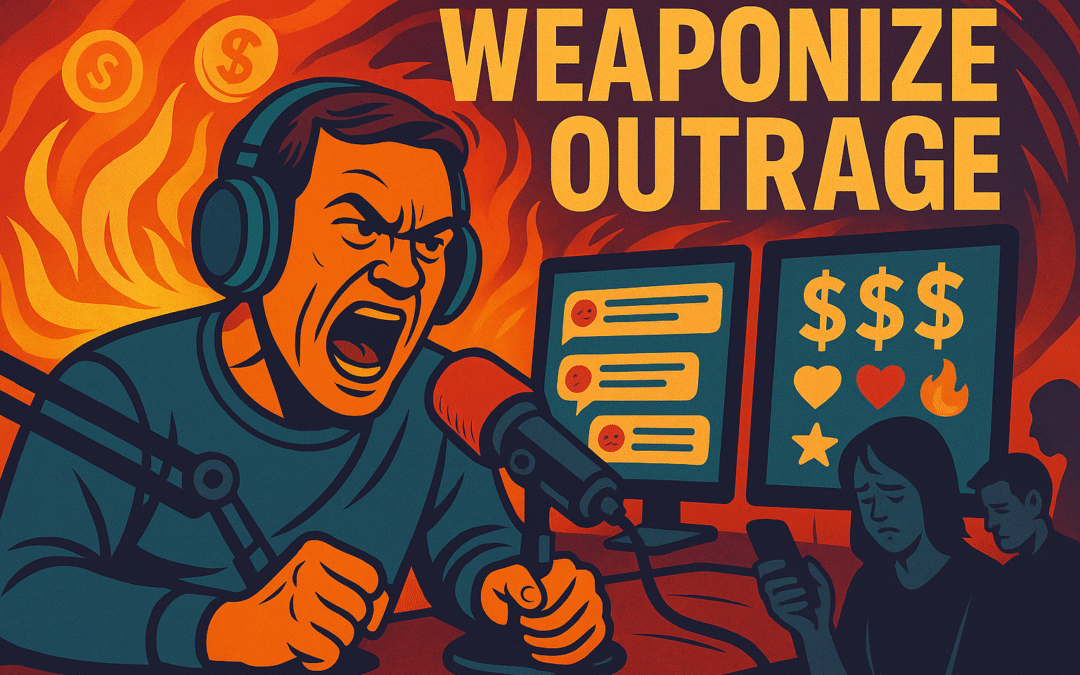
This conclusion distills what the empirical literature says about how certain online rhetorical styles—incivility, dehumanizing metaphors, perpetual outrage, and anecdote‑as‑generalization—can worsen mental health, harden intergroup animosity, and contribute to a broader risk environment for aggression. It then evaluates how those dynamics plausibly map onto anti‑LDS influencer ecosystems (including patterns evident in the public output of John Dehlin), and offers a counterspeech and pastoral care playbook aligned with both scientific evidence and the Latter‑day Saint imperative to “love thy neighbour.”27, 28
2) Moral‑emotional contagion
Moralized, outraged language travels farther online and is reinforced by social feedback loops. 7, 8
3) Dehumanization risks
Blatant dehumanization and meta‑dehumanization (feeling dehumanized by the other side) predict support for aggression and reciprocal hostility. 12–16
4) Rumination & venting
Co‑rumination and “venting” typically increase anger and depressive symptoms rather than relieve them. 9–11
5) Ethical bounds
Psychologists are obligated to avoid harm, avoid deceptive public statements, and use bias‑free language—including about religion. 1, 16, 2
Incivility polarizes and biases interpretation. Controlled experiments document that uncivil comments push readers toward more extreme risk perceptions and heighten perceived bias—the “nasty effect.” 4, 5, 6
Moral‑emotional content spreads (“moral contagion”). Each additional moral‑emotional word in a political message meaningfully increases diffusion; social feedback loops further train users to express outrage. 7, 8
Dehumanization & meta‑dehumanization elevate aggression risk. Reviews and multi‑study papers show that seeing an outgroup as “less than human”—or believing they see you as less than human—predicts support for aggressive policies and reciprocal hostility. 12–16, 38
Venting and co‑rumination typically backfire. Rumination exacerbates depression and anger; “venting” increases aggressive responding. 9–11
Correction rarely “backfires,” but persuasion works better when it’s values‑aligned. Large‑N studies find classic “backfire effects” are uncommon; moral‑reframing across value foundations can improve cross‑partisan persuasion. 32–35
Ethics & language matter. APA ethics and bias‑free language guidance explicitly cover public statements and religious groups; “dangerous speech” scholarship warns that dehumanizing metaphors lower inhibitions against harm. 1, 16, 2, 3
2) Applying The Evidence to Anti‑Mormon Influencer Ecosystems
Many high‑engagement anti‑LDS channels routinely feature three risk‑bearing patterns the literature flags:
“Cult” framing and BITE‑model generalizations. John Dehlin’s platforms have repeatedly hosted BITE‑model evaluations of the Church (e.g., with Steven Hassan) and publish content positioning the Church as “cult‑like.” These are accessible and rhetorically potent labels,20, 19, 15 but research on dangerous/dehumanizing metaphors cautions that such language can facilitate social distancing, stereotyping, and justification of hostility—especially when applied categorically to millions of believers. 3, 12
Anecdote→Institution overreach. A characteristic rhetorical move is to elevate painful individual narratives to sweeping claims about the whole Church. Psychologically, this leverages availability and “moral contagion,” which the literature finds increases diffusion and polarization online. 7, 4
Perpetual outrage & co‑rumination as content strategy. Episodic “venting” discussions about harms (real or perceived) can strengthen belonging in ex‑believer communities—but co‑rumination and venting are linked to higher anger and depressive symptoms, not relief. 9–11
Note on credentials: Dehlin publicly affirms he holds a Ph.D. in Clinical & Counseling Psychology and clarifies he is not a licensed psychologist; he states he practices coaching, not psychotherapy. Ethical questions therefore pertain not to licensure per se, but to the use of psychological authority in public commentary—where APA standards still speak to avoiding harm and avoiding deceptive statements. 18, 1, 16
3) Seven psychological pathways of likely treatment-induced harm
3.1 Co‑rumination & “venting” loops
Repeatedly revisiting grievances in communal spaces—especially when incentivized by platform algorithms—tracks with higher depressive symptoms and sustained anger; “venting” increases aggressive responding rather than dissipating it. 9–11
3.2 Moral‑outrage reinforcement
Moral‑emotional language spreads farther; social feedback trains creators to escalate outrage. This dynamic rewards ever‑sharper condemnations of a target group (e.g., “the Church,” “TBMs”), making moderation costly and extremes lucrative. 7, 8
3.3 Dehumanization & meta‑dehumanization
When members perceive rhetoric portraying them as duped, cultic, or morally diseased—and when critics perceive faithful members as dehumanizing them—the research indicates a reciprocal escalation pathway toward hostility. 12–16
3.4 Status‑seeking & “moral grandstanding”
A growing literature links public moralizing for status/ingroup acclaim with interpersonal conflict and polarization. While advocacy can be principled, grandstanding dynamics on social platforms often entrench combative tones that harm bystanders—including those in faith crisis. 17a
3.5 Identity threat & reactance
Direct attacks on a person’s sacred values (faith, family) predict defensive “reactance.” Empirically, global “backfire” is uncommon when correcting facts, but persuasion improves when reframed to the audience’s moral values. 32–35
3.6 Ethical slippage in public psychology
Even when speaking as a coach or commentator, psychologists are urged to avoid harm, avoid deceptive public statements, and use bias‑free language about protected categories (including religion). Public commentary that pathologizes a faith wholesale risks violating the spirit (if not the letter) of these norms. 1, 16, 2, 3
3.7 When counterspeech helps—and when it doesn’t
Field experiments show empathy‑based counterspeech can reduce online hate in some contexts, though results are mixed across platforms and designs. Effective counterspeech emphasizes perspective‑taking and de‑escalation, not reciprocal contempt. 30–31
4) Case context: the Charlie Kirk killing (Sept 10, 2025) & rhetoric‑risk
On September 10, 2025, conservative commentator Charlie Kirk was fatally shot during a campus event at Utah Valley University. Prosecutors have charged a 22‑year‑old suspect, and early filings/public statements include that the suspect said Kirk “spreads too much hate”; investigators also described engraved messages on casings referencing antifascism and internet memes. Proceedings and motive remain matters for the courts. 21, 22, 25, 26
Sources: ABC News reporting on the suspect statement and charging decisions; Associated Press coverage of the note/texts and surrender; PBS/AP wire; NBC affiliates on engraved casings; Politico on post‑event disinformation operations. 21, 22, 23, 24, 26
What this paper does—and does not—claim.
We do not claim anti‑LDS influencers caused this crime.
We do argue—and the literature supports—that persistent demeaning and incendiary rhetorical climates (left, right, religious, secular) raise baseline risk for reciprocal dehumanization and grievance‑fueled aggression. 3, 12–16
5) Ethical and doctrinal anchors
The APA’s Ethics Code places Beneficence and Nonmaleficence (avoid harm) at the center and cautions against deceptive public statements; APA Style urges bias‑free language—including about religion. 1, 16, 2
Latter‑day Saint leaders repeatedly teach to love our enemies and live peacefully with those who differ (“Loving Others and Living with Differences”), and Church statements have condemned violence—reaffirming the Savior’s commandment to love our neighbor. 27, 28
6) Rhetoric‑risk audit
Use this to evaluate posts, streams, and threads across the ideological spectrum.
INCIVILITY Does the content use insults, ridicule, or contempt? (Expect polarization.) 4, 5
DEHUMANIZATION Are believers portrayed as brainwashed, sub‑human, or “cult drones”? (Expect hostility loops.) 12–16
ANECDOTE→ALL Are singular harms generalized to “the Church as a whole”? (Expect availability bias.)
OUTRAGE INCENTIVES Is moralized outrage the engagement engine? (Expect reinforcement.) 7, 8
RUMINATION Does the content invite repeated grievance recounting without resolution? (Expect worse mood/anger.) 9–11
ETHICS Are professional credentials used to pathologize millions? (Check “avoid harm” & bias‑free language.) 1, 2
7) Action plan: counterspeech, care, and community
For influencers (including critics)
Replace categorical labels (“cult members,” “sheeple”) with specific behaviors or policies you contest. 2, 3
Pair critique with clear relief pathways (how to report harm, where to find licensed care), avoiding co‑rumination streams. 9–11
Prefer values‑aligned moral reframing over shaming; it persuades more and polarizes less. 35, 32
For Latter‑day Saints & faith‑adjacent audiences
Use empathy‑based counterspeech and report content that crosses into harassment; avoid counter‑contempt. 30–31
Anchor responses in doctrine: love of neighbor; zero tolerance for violence or threats. 27, 28
Encourage perspective‑taking prompts in contentious threads. 30
For pastoral care & mental‑health allies
Screen for online co‑rumination exposure; coach clients toward active problem-solving and values‑consistent living instead of grievance‑scrolling. 9–11
Use bias‑free language about religious identity; validate pain without global derogation. 2
8) Limits & transparency
This paper infers risk from rhetorical patterns supported in the literature. It does not claim that any named individual intended harm, nor that criticism of a church is inherently harmful. Free speech—including sharp critique—remains essential; the question here is how to exercise it in ways that minimize iatrogenic damage and the corrosive dynamics the evidence repeatedly identifies.
References
American Psychological Association, Ethical Principles of Psychologists and Code of Conduct. apa.org/ethics/code. :contentReference[oaicite:0]{index=0}
APA Style, “Bias‑free language.” apastyle.apa.org. :contentReference[oaicite:1]{index=1}
Anderson, Brossard, et al. “The ‘Nasty Effect’: Online Incivility and Risk Perceptions of Emerging Technologies.” J. Computer‑Mediated Communication (2014). academic.oup.com. :contentReference[oaicite:3]{index=3}
Anderson, “Toxic Talk: How Online Incivility Can Undermine Perceptions of Media.” International Journal of Public Opinion Research (2018). academic.oup.com. :contentReference[oaicite:4]{index=4}
Yeo et al., “The effect of comment moderation on perceived bias…” Information, Communication & Society (2019). tandfonline.com. :contentReference[oaicite:5]{index=5}
Brady et al., “Emotion shapes the diffusion of moralized content in social networks.” PNAS (2017). pnas.org. :contentReference[oaicite:6]{index=6}
Brady et al., “How social learning amplifies moral outrage expression in online social networks.” Science Advances (2021). science.org; open‑access: pmc.ncbi.nlm.nih.gov. :contentReference[oaicite:7]{index=7}
Michl et al., “Rumination as a Mechanism Linking Stressful Life Events and Depression.” Clinical Psychological Science (2013). pmc.ncbi.nlm.nih.gov. :contentReference[oaicite:9]{index=9}
Bushman, “Does Venting Anger Feed or Extinguish the Flame?” Personality and Social Psychology Bulletin (2002). faculty.washington.edu. :contentReference[oaicite:10]{index=10}
Kteily, Hodson & Bruneau, “They See Us as Less Than Human: Meta‑Dehumanization…” (2016 summary). scholars.northwestern.edu. :contentReference[oaicite:13]{index=13}
Landry et al., “Meta‑dehumanization leads to greater hostility than metaprejudice.” Group Processes & Intergroup Relations (2020). ucsb.edu. :contentReference[oaicite:14]{index=14}
APA standards overview emphasizing “Avoiding Harm” & “Avoidance of False or Deceptive Statements.” siop.org (cheat sheet). :contentReference[oaicite:15]{index=15}
Grubbs, Warmke, Tosi, et al., research on “moral grandstanding” and conflict (overview). PLOS One.
Dehlin, “On My Education, Training, Licensure Status, and Coaching Practice.” mormonstories.org. :contentReference[oaicite:16]{index=16}
“Assessing the Mormon Church Using Steven Hassan’s BITE Model for Cults.” mormonfaithcrisis.com. :contentReference[oaicite:17]{index=17}
Mormon Stories episode with Steven Hassan. mormonstories.org. :contentReference[oaicite:18]{index=18}
ABC News: “Tyler Robinson said he killed Charlie Kirk because he ‘spreads too much hate’: Officials” (Sept 16, 2025). abcnews.go.com. :contentReference[oaicite:19]{index=19}
Associated Press: “Suspect left note… later confessed in texts” (Sept 16, 2025). apnews.com. :contentReference[oaicite:20]{index=20}
PBS/AP: “Suspect feared being shot by police before surrendering, sheriff says” (Sept 18, 2025). pbs.org. :contentReference[oaicite:21]{index=21}
Elder Dallin H. Oaks, “Loving Others and Living with Differences” (Oct 2014). churchofjesuschrist.org. :contentReference[oaicite:25]{index=25}
Church Newsroom statement on violence following the UVU shooting (Sept 10, 2025). newsroom.churchofjesuschrist.org. :contentReference[oaicite:26]{index=26}
Hangartner et al., “Empathy‑based counterspeech can reduce racist hate speech” (PNAS, 2021). Open access index. zora.uzh.ch. :contentReference[oaicite:27]{index=27}
USC/ISI (2024) report on counterspeech limits on Reddit (news release). usc.edu. :contentReference[oaicite:28]{index=28}
Nyhan & colleagues, “Why the backfire effect does not explain…” PNAS (2021). pnas.org. :contentReference[oaicite:29]{index=29}
Swire‑Thompson et al., “The backfire effect after correcting misinformation is rare.” pmc.ncbi.nlm.nih.gov. :contentReference[oaicite:30]{index=30}