by Anonymous | Apr 16, 2026 | Uncategorized
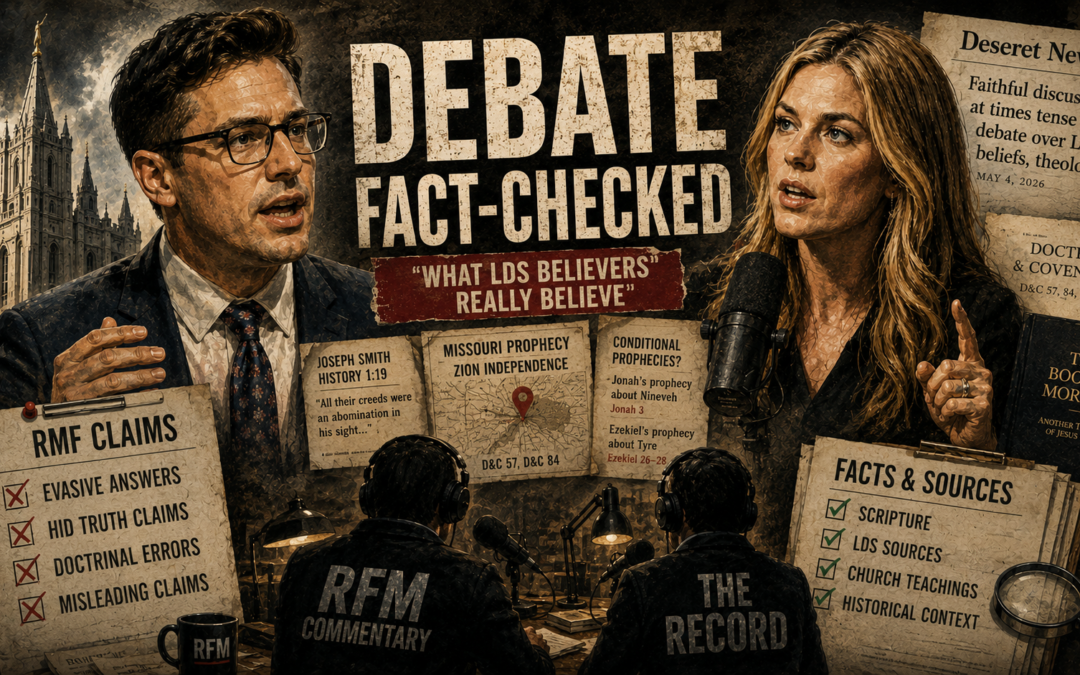
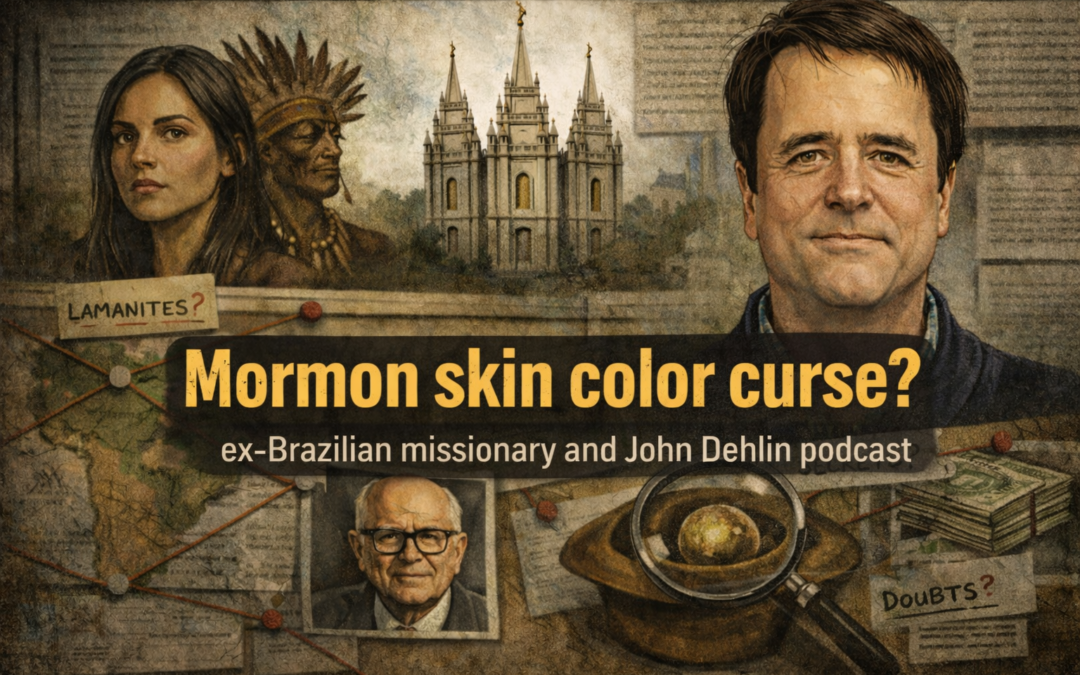
Mormon Stories Podcast Ep. 2128
Podcast / Episode / Title: Mormon Stories Podcast — “Perfectionistic Mormon Missionary Sent Home Early From Brazil – Debora Meireles Ling” (Ep. 2128)
A recurring issue in this section is the lack of clear distinctions between historical LDS culture, current official doctrine, local anecdote, and speculative motive claims. Different categories of information are often blended together, which weakens analytical clarity.
It also relies heavily on loaded framing. While it references real historical challenges, it often presents the most critical interpretations as if they were already proven conclusions. This approach reduces nuance and makes it harder for readers to separate fact from interpretation.
Evaluation Table
| # |
Claim Summary |
Category |
| 1 |
Latin American/Brazilian members were framed as Lamanite descendants; dark skin is treated as a curse in current LDS belief |
Partial Truth / Misleading |
| 2 |
Brazil’s mixed ancestry and São Paulo temple pressures were a main reason the 1978 restriction ended |
Mostly True / Oversimplified |
| 3 |
LDS girls as young as 7 were effectively expected to dress at garment level |
Partial Truth / Misleading Generalization |
| 4 |
Brazil’s LDS self-identification numbers prove a 15–20% activity rate |
Mixed: True premise / Weak inference |
| 5 |
The Church does not prepare youth for hard questions and uses “thought stopping” |
Misleading |
| 6 |
Missions are generally “inhumane” and not for missionaries’ well-being |
Overgeneralized / Not Provable |
| 7 |
A mission president may have tried to block an interracial marriage |
Historical background true / motive claim not provable |
| 8 |
2015 policy was reversed because of blowback, and the Church hid the 2019 reversal |
Mixed: policy change true / motive & concealment claims misleading |
| 9 |
The Church pushed vaccines for profit, hid wealth, and was not helping the poor directly |
Mixed |
| 10 |
Book of Mormon changes, archaeology, “rock in hat,” and unseen plates collapse the truth claim |
Mixed |
| 11 |
Joseph Smith polygamy was sold as widow-care; in reality wives were as young as 12 and coerced |
Misleading |
| 12 |
The Church teaches people are broken and only organized religion makes children moral |
Misleading / Opinion |
A recurring issue throughout this section is the failure to clearly distinguish between historical LDS culture, current official doctrine, local anecdote, and speculative motive claims. In addition, it relies heavily on loaded framing. Frequently, he presents real historical difficulties in their strongest anti-LDS interpretation as if that interpretation were already proven.
1) Lamanite identity and the “dark-skinned cursed people” framing
“your ward or stake did or did not uh self-identify as Lammonites or descendants of the dark skinned cursed people basically according to the Book of Mormon.” (00:06:15; line 35) – John Dehlin
“I think I do know that in my family we we did talk about how we were descendants of the Lamonites.” (00:06:15; line 35) – Deborah Ling
Claim type: doctrinal / historical
Evaluation: Partial Truth on older LDS culture, Misleading as a statement of current doctrine.
While the scriptural language is indeed troubling, the Book of Mormon does contain passages referring to the Lamanites and a “skin of blackness.” That part is not invented. However, current Church materials explicitly reject the idea that dark skin represents a curse or divine disfavor… and it says the nature of the mark is “not fully understood.” The same page says standing before God is not determined by skin color. Also, the Book of Mormon introduction was revised in 2006 from calling Lamanites the “principal ancestors” of American Indians to saying they were “among the ancestors,” which cuts against sweeping modern ethnicity-to-Lamanite claims. See 2 Nephi 5, Race and The Church of Jesus Christ of Latter-day Saints, Book of Mormon Introduction, and Book of Mormon and DNA Studies.
This raises an important question: Is the speaker referring to historical LDS cultural framing, the raw scriptural text, or current official doctrine?
Bottom line: Usually, people mixes a real historical LDS framing with an inaccurate present-day doctrinal claim.
However, it also turns a real historical factor into a one-note cynical explanation.
2) Brazil and the 1978 priesthood/temple restriction
“One of the main motivations for it being lifted was that Spencer Kimble, the prophet at the time, loved the Brazilian people and kept…” (00:07:23; line 41) – John
Claim type: historical / institutional motive
Evaluation: Mostly True, but oversimplified.
Official Church history clearly shows that Brazil played a meaningful role. Church sources say Spencer W. Kimball recognized the practical and spiritual difficulty created by the restriction in a country with widespread mixed ancestry, and the São Paulo temple sharpened that problem. Official sources also say the worldwide growth of the Church made the restriction increasingly incompatible with its mission. However, the historical record does not support reducing the 1978 revelation to a simple growth strategy or demographic workaround. The Church’s own historical materials present Brazil as one major factor among several that moved leaders toward united prayer and revelation, and the Church now explicitly disavows past racist explanations for the restriction. See The Revelation on the Priesthood, How a 1978 Revelation and a Temple Changed Everything in Brazil, and Race and The Church of Jesus Christ of Latter-day Saints.
Bottom line: Brazil was genuinely important in the lead-up to 1978. However, the section simplifies this complex historical process into a single, overly cynical explanation.
3) Child modesty as “garment-level” dress
“it was not allowed to do that. I had to always cover up…” (00:11:45; line 62) – Deborah
“… had to dress modestly because first off, that’s a sign of respect for your body cuz your body is a temple. And also because I needed to already be be prepared for when I did go to the temple.” (00:11:45; line 62)
Claim type: cultural / policy
Evaluation: Partial Truth as culture, misleading if generalized as a universal Church rule.
Church materials do teach modest dress, and older Church family guidance even said children can begin dressing modestly at a young age. But there is no Church-wide policy that seven-year-old girls must dress at endowed-garment cut lines. That is a family-level application of modesty rhetoric, not an official universal mandate. So Deborah’s memory is credible as lived experience, but the extrapolation to a formal Church requirement is too broad. See Modesty, Dress and Appearance, and Teaching Modesty to Our Children.
Bottom line: Modesty teaching is real; “garment-level at age seven” is family rigor, not standardized Church policy.
4) Brazil membership numbers and “activity rate”
“Apparently, the Church of Jesus Christ of Latter-day Saints reports 1.5 million Mormons in Brazil.” (00:33:06; line 164)
“…only about 226,000 Brazilians self-identify as Mormon.” (00:33:39; line 167)
“So, there’s about a 15 to 20% activity rate…” (00:34:19; line 170) – John Dehlin
Claim type: statistical
Evaluation: True premise, weak inference.
The Church currently reports over 1.5 million members in Brazil. A scholarly summary of 2010 Brazilian census data reported about 226,509 self-identified Latter-day Saints. These figures clearly demonstrate a significant gap between recorded membership and self-identification. However, converting this directly into a 15–20% “activity rate” is methodologically weak. Census self-identification, ward records, and weekly sacrament attendance are different things. The broad point—attrition and inactivity are a serious issue in Brazil—is fair; The numbers given do not firmly support the claim. See News for Temples in Brazil and Indonesia and Mormonism in Brazil (Springer).
Bottom line: The membership gap is real. However, the specific “activity rate” presented here is an inference rather than a directly measured statistic.
5) “The Church doesn’t prepare youth” and uses “thought stopping”
“Just bear your testimony and walk away. That’s what we were told.” (01:01:02; line 308) – Deborah
“…the church hasn’t and doesn’t really choose to prepare its youth and young adults for those types of very common engagements.” (01:05:41–01:06:11; lines 332–335)
“I think that’s might be sometimes referred to as thought stopping.” (01:07:46; line 344) – John
Claim type: institutional / rhetorical
Evaluation: Misleading.
Deborah’s local MTC or mission culture may indeed have been simplistic. But the stronger church-wide claim does not match the Church’s own published guidance. Official Church materials now say members should seek learning “by study and also by faith,” ask questions, analyze information, weigh reliability, and place facts in context. That does not prove every leader handles questions well. It does disprove the broad claim that the Church’s official stance is to suppress inquiry because it fears truth. See Answering Gospel Questions and Guiding Principles to Help Answer Gospel Questions.
Logic issue: local anecdote is being converted into a universal institutional motive claim.
Bottom line: Poor question-handling may have happened. The sweeping “the Church chooses not to prepare people and teaches thought-stopping” claim is too broad.
6) “Missions in general have a really inhumane quality”
Margie : “missions in general have a really inhumane quality about them. They they exist for a certain outcome, but they’re not for the well-being, let’s say, of the missionaries themselves.” (01:32:21; line 464)
Claim type: evaluative / institutional
Evaluation: Overgeneralized / Not Provable.
This statement reflects rhetoric rather than a demonstrable universal fact. Hard missions, immature leadership, exhaustion, and bad local decisions are all real possibilities, and Deborah’s suffering should not be minimized. But the Church’s own missionary standards explicitly include rest, nutrition, refocusing, and emotional, physical, and spiritual well-being. However, this does not mean that all missions consistently meet that standard. It does mean the categorical description “missions in general are inhumane” overshoots what the evidence can bear. See Physical Well-Being and Missionary Organization and Activities.
Bottom line: Criticize real mission failures, yes. Calling the missionary system “inhumane” as a universal institutional fact is too sweeping.
7) Speculation that a mission president may have tried to block an interracial marriage
“…that was taught by the Mormon church for 100 plus years and was still being taught in I don’t know 2014 2015 for sure.” (01:48:22; line 542)
“Do you think that might have been where your second mission president was coming from?” (01:48:22; line 542) – John
Claim type: historical / motive attribution
Evaluation: Historical background true; motive claim not provable.
Older LDS teaching materials really did at times recommend marrying within the same racial background. But moving from that history to “this specific mission president was probably trying to prevent an interracial marriage” is speculation. The current Church topic page explicitly says interracial marriage is not wrong and is not discouraged. So there are two separate judgments here: the historical backdrop is real; the accusation about this particular man’s motive is not established. See Race and The Church of Jesus Christ of Latter-day Saints.
Risk flag: 🟠 Moderate false-light risk.
An identifiable leader is assigned a racially suspect motive without evidence.
Bottom line: Use the historical record carefully. Do not turn a possible inference into a factual accusation.
8) The 2015 same-sex parent policy, the 2019 reversal, and the “sneaky” framing
“…when the church backtracked and cancelled the 2015 revelation?” (01:56:33; line 581)
“…that isn’t that sneaky that they would tell everyone that it it was in play over the pulpit and then when they take it away they don’t tell everyone. That’s not super honest…” (01:57:51; line 587) – John
Claim type: institutional / motive / honesty
Evaluation: Mixed.
The policy change itself is real. In 2015 the Church formally restricted baptism and certain ordinances for children in certain same-sex parent situations, and in April 2019 the Church publicly reversed the baptismal restriction. The 2019 change was announced openly in Church leadership communications and public newsroom coverage. Therefore, the claim that the Church “didn’t tell anyone” or intentionally “hid” the change is misleading. While many members may not have heard the announcement at the local level, the change was publicly communicated through official channels. Likewise, “they reversed it because of blowback” may be an understandable inference, but it is still an inference; the official explanation was extended counseling and prayer. See Context on Handbook Changes Affecting Same-Sex Marriages, First Presidency Clarifies Church Handbook Changes, April 2019 Leadership Session Announcement, and Love Motivated Policy Changes Toward LGBT Parents and Children.
Risk flag: 🟠 Moderate false-light / dishonesty framing.
Public disagreement with the policy is fair; presenting concealment as settled fact is not.
Bottom line: The policy really changed. The “sneaky” concealment claim overstates the record.
9) Vaccines, pharma stock motive, church wealth, and helping the poor
“…you felt like the church was giving self-interested advice to the members to get the vaccines because they stood to profit…” (02:01:20; line 605)
“…they used to publish their budget prior to 1960.” (02:02:28; line 611) – John
Claim type: institutional / financial / motive
Evaluation: Mixed.
This section combines several distinct claims into a single argument.
It is true that the First Presidency urged members to get vaccinated in August 2021 and tied that counsel to the recommendations of medical experts and government leaders. the Church maintains diversified reserves, and official Church history says annual income/expenditure reports were read in general conference from 1915 to 1959. It is further true that the SEC charged the Church and Ensign Peak over disclosure failures and misstated filings, and the Church publicly said it regretted mistakes. Those are real transparency problems. However, the stronger accusation—that vaccine guidance was driven by financial motives… because of investment interests—is not proved here. The Church’s public rationale was health-based, and CDC sources supported the vaccines as helping protect against severe illness, hospitalization, and death. Likewise, the absolute claim that the Church was not using money to help the poor directly is too broad; the Church reports over $1 billion annually in recent humanitarian/welfare aid, including $1.45 billion in 2024. See The Church Urges More Action to Limit the Spread of COVID-19, SEC Press Release 2023-35, Church Finances, CDC: Benefits of Getting Vaccinated, and 2024 Caring for Those in Need Summary.
Bottom line: Real reserve wealth and real transparency failures do not automatically prove corrupt vaccine motive.
10) Book of Mormon revisions, archaeology, the seer stone, and the plates
“I did not know that the Book of Mormon had been edited multiple times, not just for grammatical errors.” (02:20:59; line 707)
“There were no horses in the time of the Book of Mormon.” (02:20:59; line 707)
“…he used the rock that he used to scam people out of money for…” (02:23:09; line 719)
“Nowhere to be found. Nowhere to be seen actually by anybody.” (02:23:43; line 722) – Deborah
Claim type: historical / textual / archaeological
Evaluation: Mixed.
The seer-stone-in-a-hat point is real and officially acknowledged. Church sources say multiple accounts describe Joseph using either interpreters or a seer stone, and many accounts describe the stone in a hat. That is not “anti-Mormon literature”; it is on the Church’s own site. Also real: the Book of Mormon text was edited between editions. But official Church materials say many of the early changes were grammatical or stylistic, so the implication that the revisions themselves prove collapse is overstated. Calling the seer stone a proven tool to “scam people out of money” also goes too far. Church history acknowledges treasure seeking, but the record remains more complicated than the rhetoric suggests. Finally, “the plates were seen by nobody” is flatly false on LDS evidence: the Book of Mormon still includes the Three and Eight Witnesses, and Church history topics explicitly discuss those witnesses. Archaeological and DNA objections are real pressure points, but the Church’s own essays argue those questions are not decisively settled and do not commit the Church to a single official geography. See Book of Mormon Translation, Seer Stones, Treasure Seeking, Joseph Smith’s 1826 Trial, Witnesses of the Book of Mormon, and Book of Mormon and DNA Studies.
Bottom line: The host is strongest where it notes the seer stone and translation complexity. It overreaches when it turns disputed or complicated evidence into settled fraud.
11) Polygamy: widow-care story, coercion, and “as young as 12”
“…they had a lot of men die and so the women couldn’t take care of themselves and so they had to get married so that they would be able to have some sort of support…” (02:22:07; line 713)
“Mormon polygamous wives were as young as 12 years old.” (02:31:41; line 764) – Deborah
Claim type: historical
Evaluation: Mixed.
The widow-support explanation is not an adequate description of Joseph Smith’s Nauvoo plural marriage. The Church’s own essay roots plural marriage in claimed sealing and religious motives, not mainly economic care for abandoned women. So that simplified defense is weak. But replacing it with “as young as 12” is also inaccurate in this Joseph Smith context. The Church essay says Joseph’s youngest plural wife was Helen Mar Kimball, sealed several months before her fifteenth birthday. That does not remove the moral difficulty. It does mean precision matters. The same is true of “coercion.” Some historical accounts show anguish, pressure, and wrenching sacrifice; the record is morally difficult. But “coercion” should be argued case by case, not simply asserted as a totalizing label for the whole practice. See Plural Marriage in Kirtland and Nauvoo.
Bottom line: Host correctly rejects the sanitized widow-care story, but it then introduces its own imprecision.
12) “The church teaches you that you are broken”
“…the church teaches you that you are broken and that they have the answer to your to for you and they will fix you as long as you do what you’re told.” (02:48:41; line 842) = Deborah
Claim type: doctrinal / cultural
Evaluation: Misleading as doctrine; fairer as a report of lived culture.
This is one of the sharpest overstatements in the section. LDS doctrine does teach the Fall, repentance, covenant duty, and the need for Jesus Christ’s grace. But the Church’s own current materials also teach that every person is a child of God with divine nature, eternal destiny, and divine potential. That is not the same message as “you are broken and the institution will fix you if you obey it.” The criticism is much stronger as a description of how some members experience perfectionistic LDS culture than as a summary of the doctrine itself. The added claim that children do not need organized religion to become moral is a philosophical position, not a factual historical claim settled in this section. See Heavenly Parents, Children of God, and Young Women General Presidency: “What’s in a Name?”.
Bottom line: Culture may produce brokenness narratives; official doctrine emphasizes divine identity and potential.
Final assessment
The strongest claims in this section are those grounded in facts that the Church now openly acknowledges: the seer stone, multiple translation complexities, Brazil’s role in 1978, the 2015/2019 policy change, and the existence of large reserves plus real SEC disclosure failures.
In contrast, the weakest claims are those that move from established facts to assumptions about motive or overly broad conclusions: “the Church teaches skin color as divine curse now,” “missions are inhumane,” “the mission president was probably blocking interracial marriage,” “leaders pushed vaccines for profit,” “the Church hid the 2019 change,” or “the Church teaches people they are broken.” Those claims rely on conflation, speculation, and loaded framing rather than disciplined proof.
Sources consulted: uploaded transcript; official Church scripture and Gospel Topics pages; Church history topics; Joseph Smith Papers / Church history material; Church Newsroom; SEC; CDC; Springer reference on Mormonism in Brazil.
Live Sources
by Anonymous | Mar 31, 2026 | Uncategorized
The True Prosperity Doctrine of The Church of Jesus Christ of Latter-day Saints
Why Prosperity Is Often Misunderstood
In religious discussions today, few ideas are more misunderstood than “prosperity.”
Some assume that righteousness guarantees wealth and success.
However, others believe hardship must signal divine disfavor.
In reality, this assumption misrepresents what Latter-day Saint scripture actually teaches.
A careful study of the Standard Works reveals a deeper, covenant-centered truth.
Instead, prosperity is not primarily about wealth—it is about alignment with God.
Any material blessings are meant to serve divine purposes.
The Scriptural Foundation: A Covenant Pattern
The Book of Mormon famously teaches:
“Inasmuch as ye shall keep my commandments ye shall prosper in the land”
(1 Nephi 2:20)
However, across the narrative, prosperity consistently includes:
- Spiritual strength and guidance
- Protection and preservation
- Peace and stability
- Capacity to fulfill God’s purposes
At times, material wealth accompanies righteousness—but it is never the defining measure of prosperity.
Jacob’s Clarifying Doctrine: Seek God First
One of the clearest correctives to confusion comes from the prophet Jacob:
“But before ye seek for riches, seek ye for the kingdom of God.
And after ye have obtained a hope in Christ ye shall obtain riches, if ye seek them;
and ye will seek them for the intent to do good…”
(Jacob 2:18–19)
This passage outlines a clear pattern for understanding righteous prosperity:
- Seek the kingdom of God first
- Obtain a hope in Christ—a spiritually transformed heart centered in Him
- Then, if desired, seek riches
- Use those riches only for righteous purposes
Jacob immediately defines those purposes:
“…to clothe the naked, and to feed the hungry, and to liberate the captive,
and administer relief to the sick and the afflicted.”
(Jacob 2:19)
Key doctrinal point: Jacob does not condemn wealth itself. He condemns seeking riches
before God, using wealth for pride, and allowing prosperity to produce inequality and spiritual blindness.
Material Wealth Can Be a Blessing When It Serves God and Neighbor
Importantly, scripture does not teach that material blessings are inherently wrong.
Instead, it teaches that wealth becomes good or harmful depending on its priority and use.
When wealth is sought after one has placed God first, and when it is used to bless others,
it can become a meaningful stewardship. In Jacob’s framework, riches may be desired
if they are pursued with the intent to do good.
That means material prosperity can be a blessing when it helps us:
- Feed the hungry and care for the poor
- Relieve suffering and bless the sick and afflicted
- Strengthen families and communities
- Support the work of God and advance righteous causes
- Live generously rather than selfishly
In this sense, wealth is not meant to be a badge of spiritual superiority. It is meant to be a tool of discipleship.
Doctrine and Covenants: Blessings Governed by Law
Modern revelation reinforces the same principle:
“There is a law, irrevocably decreed in heaven… upon which all blessings are predicated”
(Doctrine and Covenants 130:20–21)
“I, the Lord, am bound when ye do what I say”
(Doctrine and Covenants 82:10)
At the same time, these passages teach that God blesses obedience.
However, the nature and timing of those blessings remain in His wisdom.
Not every blessing is material.
Not every righteous person will experience visible abundance in mortality.
Biblical Harmony: Treasure and Priority
Likewise, Jesus Christ taught the same principle:
“Seek ye first the kingdom of God…”
(Matthew 6:33)
“Where your treasure is, there will your heart be also”
(Matthew 6:21)
The order matters. When God is first, material blessings can be received in humility and used well.
When wealth is first, the heart is drawn away from God.
The Old Testament also presents prosperity in a covenant context:
“Then thou shalt make thy way prosperous, and then thou shalt have good success”
(Joshua 1:8)
In scripture, prosperity is not merely accumulation. It is covenantal flourishing under God’s favor.
The Book of Mormon Warning Cycle
The Book of Mormon repeatedly warns that prosperity can become spiritually dangerous if it leads to pride.
Helaman summarizes the pattern:
The people remember God in affliction, but in prosperity they often harden their hearts
(Helaman 12:1–3)
Jacob also warns against judging others because of wealth, status, or costly apparel
(Jacob 2:13).
In other words, material blessing is never a license for pride. It is a test of whether disciples will remain humble,
generous, and centered in Christ.
Correcting Common Misunderstandings
Misconception 1: “Righteous people become wealthy”
Scripture never teaches that all righteous people will become materially rich.
Many faithful servants of God suffer poverty, illness, persecution, or loss.
Misconception 2: “Poverty indicates unrighteousness”
This idea is rejected in Jacob 2, which condemn contempt for the poor
and pride rooted in worldly status
(Jacob 2:13).
Misconception 3: “Wealth is inherently evil”
Jacob explicitly leaves room for seeking riches—after seeking Christ first,
and only for the purpose of doing good
(Jacob 2:18–19).
The True Prosperity Formula
Bringing these teachings together, the pattern looks like this:
Seek God first →
Be transformed in Christ →
Receive blessings →
Use them to serve others →
Progress toward eternal life
That is the true prosperity doctrine taught in Latter-day Saint scripture.
The Ultimate Prosperity
True prosperity is not financial.
- The companionship of the Holy Ghost
- A covenant relationship with God
- A Christlike heart
- Faithful stewardship
- Eternal life through Jesus Christ
All temporal blessings are secondary to that greater end.
Conclusion
The doctrine of prosperity in The Church of Jesus Christ of Latter-day Saints is clearer—and more demanding—than many assume.
It does not promise wealth—instead, it teaches priority.
Likewise, it does not celebrate accumulation; it teaches stewardship.
More importantly, it does not measure success by possessions but by faithfulness to Christ.
Jacob’s teaching resolves the confusion:
seek God first; then, if riches come, use them to bless others.
In that light, prosperity is not about what we accumulate, but about how faithfully we align with God
and use every blessing to build His kingdom and serve His children.
Quick Links
by Anonymous | Jan 26, 2026 | Church Conspiracy, Uncategorized
“Mormon Music Is More MESSED UP Than You Think.”
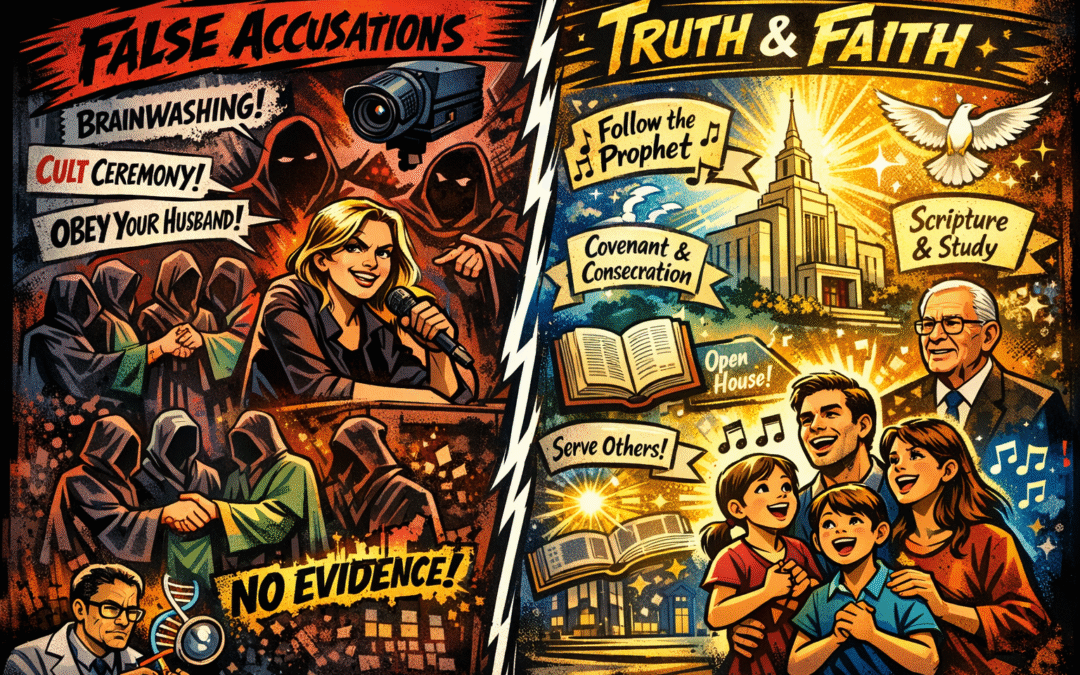
This episode repeatedly characterizes Latter‑day Saint beliefs and youth experiences as “brainwashy,” “chanting,” “cult,” and otherwise abnormal—framing ordinary worship and family religious life as inherently suspect. Across ten claims, the analysis below documents where the host’s statements are (a) correct, (b) partly true but misleading by omission or exaggeration, or (c) false in light of current, authoritative sources. We also flag discriminatory rhetoric targeting a faith community.
“Follow the Prophet” = “brainwashy chanting”
Word‑for‑word quote (Speaker: Alyssa Grenfell)
“
Our first song is going to be Follow the Prophet… Kids start going to primary when they turn three years old… Follow the prophet… He knows the way… now the reason I wanted to start with this specific song is first because it’s very uh hypnotic… the idea of three-year-olds chanting follow the prophet… I don’t know what’s more brainwashy than chanting in my opinion.”
Core Claim
Primary song “Follow the Prophet” constitutes manipulative “chanting” and “brainwashing.”
Core finding
- What the song teaches: Latter‑day Saint songs are designed to teach doctrine simply and invite the Holy Ghost; Church materials explicitly frame children’s music as a means to learn and feel truth, not to override agency. See “The Power of Primary Songs” (Liahona, 2024).
- Parents encouraged to use hymns at home: The hymnbook preface invites families to sing in homes to bring “beauty and peace,” not coercion. Hymns Preface (see also Primary Songbook prefaces).
- Modern‑prophet context stated correctly: The host notes President Nelson’s passing and President Oaks’s calling; this is accurate.
Discrimination/Prejudice Analysis:
Labeling core worship practices of a minority faith (children’s singing) as “brainwashy chanting” uses derogatory stereotyping and imputes lack of agency to believers. Such pejoratives generalize and demean adherents’ sincerity.
Evaluation Table
| Claim Summary |
Category |
Evaluation |
Sources |
| “Follow the Prophet” is hypnotic “chanting” that “brainwashes” three‑year‑olds. |
Opinion Unsupported / Misleading |
Song invites faith and discipleship; Church teaches parents to use music to invite the Spirit, not to override agency. |
Liahona 2024
Hymns Preface (quoted in‑episode) |
Bottom line: Calling children’s religious songs “brainwashing” is a prejudicial framing, not evidence.
Finding 2 — “Secretly recorded temple video proves it’s a ‘cult ceremony’”
Quote
“a secretly recorded video of what you actually do once you get inside the temple… here I am chanting in a circle while wearing a green apron and doing secret handshakes… it’s just a cult ceremony.” Alyssa shows a video of the sacred temple worship inside an LDS Temple. At Mormon Truth, we don’t care if a sacred ceremony is LDS or a different religion altogether. This is disrespectful, even potential hate speech.
Core Claim
Because a hidden‑camera clip exists and includes symbolic gestures, the temple is a “cult ceremony.”
Core finding
- What the endowment is: The Church publicly explains the endowment’s purpose—covenants to follow Jesus Christ and learn God’s plan. ; About the Temple Endowment
- Transparency via open houses: Before dedication, every temple holds a free public open house; after dedication, the interior is reserved for members. Open Houses; Newsroom.
Discrimination/Prejudice Analysis: Pejoratively labeling the sacred rites of a religious minority as a “cult ceremony” is a classic stigmatizing trope that encourages social contempt, not understanding.
MTOPS Evaluation Table
| Claim Summary |
Category |
Evaluation |
Sources |
| Hidden‑camera clip proves the temple is a “cult ceremony.” |
Misleading |
Symbolism ≠ secrecy for deception; the Church publicly explains ordinances and invites the world inside before dedication. |
Temple Open Houses
Gospel Topics: Endowment |
Bottom line: The existence of ritual symbolism doesn’t make a religion a “cult.” The Church explains and publicly tours temples prior to dedication.
Finding 3 — “In the temple you ‘promise to obey my husband’”
Quote
“…I did promise to obey my husband… someday I will enter a temple and I’ll promise to obey my husband…”
Core Claim
The current temple endowment requires women to promise to “obey” their husbands.
Core finding
- Historical shifts: The “obey” wording was removed in 1990; in 2019, women and men make the same covenants, with “hearken” language removed. Documented by mainstream and Church‑adjacent outlets reporting the January 2019 update. Biblical language, interpreted with contemporary standards and trends, is not so easily interpreted lacks context.
Salt Lake Tribune;
Famili Is the Endowment? LA Times (1990).
- Today’s language: Official summaries describe covenants to follow Jesus Christ (laws of obedience, sacrifice, chastity, gospel, consecration)—not spousal subordination. About the Temple Endowment.
Discrimination/Prejudice Analysis: Presenting superseded, pre‑2019 language as if it is current invites contempt toward Latter‑day Saint women, implying institutionalized female inferiority that no longer reflects the ordinance.
Evaluation Table
Bottom line: The host’s wording reflects outdated ritual language and misrepresents today’s covenants.
Finding 4 — “You covenant to give everything you possess to the Church”
Quote
“…in the temple you will promise and covenant with God to give everything you possess to the Church of Jesus Christ of Latter‑day Saints…”
Core Claim
The law of consecration is a pledge to transfer one’s property to the institutional Church.
Core finding
Discrimination/Prejudice Analysis: The phrasing “give everything you possess to the Church” caricatures a sacred covenant of service as institutional greed—an inflammatory framing that invites public scorn.
MTOPS Evaluation Table
| Claim Summary |
Category |
Evaluation |
Sources |
| Consecration = giving all possessions to the Church. |
Partial Truth / Misleading |
Consecration is comprehensive devotion to God’s work; no blanket property assignment is required by the modern endowment. |
General Handbook 27
Temple Endowment |
Bottom line: The covenant is to consecrate one’s life to Christ’s work—not to deed away personal property.
Finding 5 — “Temple open houses”
Quote
“…there’s a short period of time called a temple open house where the general public is allowed to go in… young kids can go through and see what the interior of the temple looks like… we would drive for hours just to walk through.”
Core Claim
Public open houses allow anyone (including children) to tour a temple before dedication.
Evaluation
True — This description matches the Church’s stated practice. See: Temple Open Houses; Newsroom explainer.
Bottom line: Accurate.
Finding 6 — “Ages: baptisms for the dead at 12; endowment ~18”
Quote
“…to enter the temple to do baptisms for the dead, you can’t do that till you’re 12. And then you can’t do your endowment ceremony till you’re around 18 to a little older.”
Evaluation
- True (with nuance) — Youth recommends for proxy baptisms/confirmations begin in January of the year one turns 12 (with worthiness/recommend). Proxy Baptism overview.
- Generally true — Endowments are available to adult members who are prepared; many receive the endowment around missionary/service or marriatps://www.churchofjnual/gospel-topics/endowment?lang=eng” target=”_blank” rel=”noopener”>Gospel Topics: Endowment.
Bottom line: Accurate on proxy‑baptism age; endowment timing depends on readiness and circumstances.
Finding 7 — “Don’t criticize the Lord’s leaders—even if true”
Quote
“…there’s a lot of quotes that modern leaders have given… one of which is that you should not criticize the Lord’s leaders even if the criticism is true.”
Core Claim
A standing rule exists: it is wrong to criticize leaders “even if the criticism is true.”
Core finding
The oft‑quoted line is associated with then‑Elder Dallin H. Oaks in a 1980s context and is frequently quoted without context. Responsible summaries note he was counseling against public fault‑finding that undermines Church service. See FAIR’s documentation with the original context. FAIR analysis.
Discrimination/Prejudice Analysis: Presenting a de‑contextualized phrase as iron‑clad doctrine paints believers as forbidding inquiry, fostering the stereotype of blind, unthinking obedience.
Evaluation Table
| Start |
End |
Claim Summary |
Category |
Evaluation |
Sources |
| 00:10:49 |
00:11:21 |
“No criticism even if true.” |
Misleading (Context‑stripped) |
Counsel addressed destructive public criticism; not a doctrinal ban on truth or accountability. |
FAIR |
Bottom line: The claim, as framed, misleads by ignoring context and scope.
Finding 8 — “Prophet’s ‘one set of earrings’ rule”
“…one rule from a prophet… President Hinckley had announced the rule that girls should only have one set of piercings.”
Evaluation
- Historically True — President Gordon B. Hinckley counseled against tattoos and multiple piercings; he allowed for one modest pair of earrings. Oct 2000 talk.
- Current guidance — The 2022 For the Strength of Youth pamphlet emphasizes principle‑based, Spirit‑guided standards without listing an earring count. Coverage summary.
Bottom line: Correct historically; current materials emphasize principles over numeric lists.
Finding 9 — “Temple recommend question: ‘Do you believe President Oaks is a prophet of God?’”
Quote
“…there’s a list of questions… but there is one question about Joseph Smith specifically… ‘Do you believe that the church and gospel of Jesus Christ have been restored through the prophet Joseph Smith? Do you believe that President Oaks is a prophet of God? What does this mean to you?’”
Core finding
- What is actually asked: The official questions include (1) a testimony of the Restoration and (2) sustaining the President of the Church as prophet, seer, and revelator (by office; the presiding officer’s name changes over time). See the current list.
General Handbook 26 (Temple Recommends);
Newsroom explainer, 2019 update.
- Follow‑up prompts: Interviewers may ask personal, pastoral follow‑ups (e.g., “what does that mean to you?”), but the printed questions don’t hard‑code a particular name beyond the office and certainly don’t require the interviewer to ask, “What does that mean to you?”.
Discrimination/Prejudice Analysis: Portraying standard Christian‑style recommend questions as unique authoritarian control suggests believers hand their conscience to leaders—an unfair inference.
Evaluation Table
| Start |
End |
Claim Summary |
Category |
Evaluation |
Sources |
| 01:13:55 |
01:14:50 |
Official question names “President Oaks” verbatim. |
Partial / Needs Context |
Official wording sustains the President of the Church by office; interviewers can reference the incumbent’s name. |
General Handbook 26
Newsroom (2019) |
Bottom line: The concept (sustaining the living prophet) is correct; the official printed question is by office, not by permanently naming a particular person.
Finding 10 — “Warm feelings replace evidence; no DNA/archaeology needed”
Quote</strowhile I sing this song I feel happy, it’s objective proof… There’s no need for archaeological evidence. There’s no need for DNA evidence…”
Core finding
The Church does not claim DNA can “prove” or “disprove” the Book of Mormon; the official essay explicitly says DNA studies “cannot be used decisively” on historicity. Gospel Topics: DNA and the Book of Mormon.
Personal spiritual witness is central to faith, but the Church publishes robust historical and doctrinal resources and encourages study.
Discrimination/Prejudice Analysis: Reducing believers’ convictions to “feeling happy while singing” caricatures a faith’s epistemology and belittles sincere spiritual experience common across world religions.
Evaluation Table
| Start |
End |
Claim Summary |
Category |
Evaluation |
Sources |
| 00:52:55 |
00:54:02 |
Church dismisses need for evidence (esp. DNA). |
Misleading / Strawman |
Official essay: DNA evidence is indecisive either way; spiritual witness complements study, not replaces it. |
Gospel Topics DNA Essay |
Bottom line: The Church’s own essay rejects DNA “proof” rhetoric—either for or against.
Legal & Logic Analysis
Rhetorical Tactics / Fallacies
- Loaded language: “brainwashy,” “chanting,” “cult ceremony” (Segments 1–2) — prejudicial framing rather than neutral description.
- Sweeping generalization: Inferring that music‑based instruction inherently negates agency (Segment 1).
- Strawman: Collapsing spiritual witness into “happy feelings” and implying the Church forbids evidence (Segment 10).
- Context omission: Using pre‑2019 temple wording as if current (Segment 3); overstating consecration as property transfer (Segment 4).
Defamation & False‑Light Risk
- 🟠 Moderate — Present‑tense claims about temple vows (“obey my husband”) risk false‑light portrayal of current practice (2019 changes documented).
- 🟢 Low — Most statements are opinion about a religion rather than verifiable assertions about a private person (less defamation exposure).
The episode repeatedly mocks Latter‑day Saint worship and misstates key facts (temple covenants, consecration, leadership questions), encouraging the audience to view a minority religion as irrational and “cult‑like.” Where the host makes factual points (open houses; baptism age), they align with public Church sources. Where claims turn on pejoratives, they function as discriminatory rhetoric, not careful analysis.
Tone Protocol (Applied)
- Stewardship Doctrine: Parents teaching faith via music at home is an act of stewardship, not manipulation.
- Authorized Priesthood Use: Leadership succession and temple covenants follow established, published processes.
- Covenant Layering: Temple covenants (obedience to God, sacrifice, chastity, gospel, consecration) are Christ‑centered and publicly summarized.
Sources Consulted (Transparency)
Primary: ChurchofJesusChrist.org (Gospel Topics, General Handbook, Temple pages); Church Newsroom; Salt Lake Tribune; LA Times; Liahona; FAIR Latter‑day Saints. Supplementary media coverage as linked above.